This homemade Balsamic Glaze (also known as balsamic reduction) transforms ordinary dishes into restaurant-worthy meals with just two ingredients in less than 15 minutes! Sweet, tangy, glossy, and intensely flavorful, it’s the easiest way to elevate everything from Caprese salad and grilled vegetables to chicken, steak, pizza, and even strawberries!
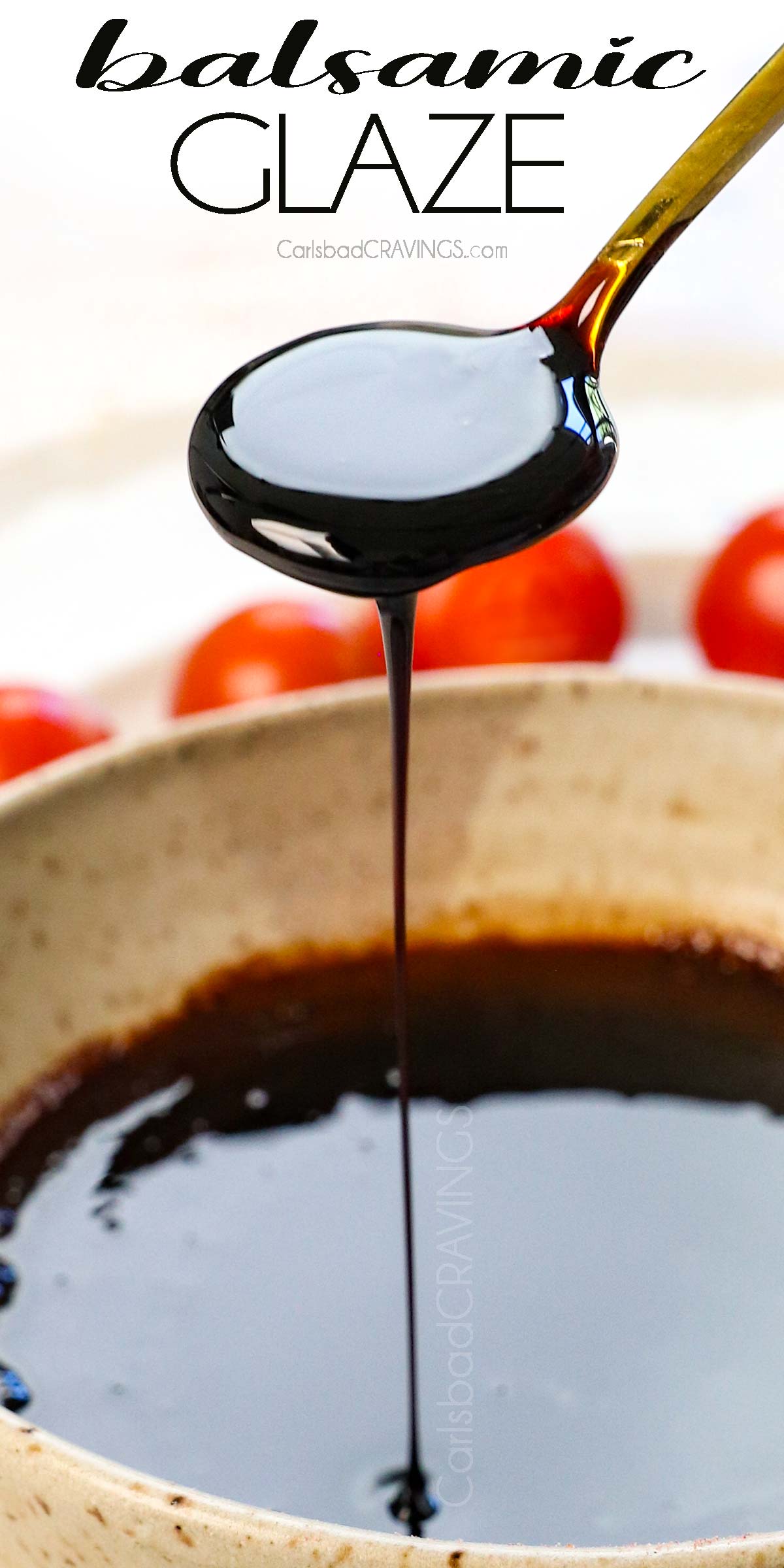

Why You’ll Love This Balsamic Glaze Recipe
Once you learn how to make balsamic glaze at home, AKA “liquid gold,” you’ll want to drizzle it on everything! Here’s why you’ll be obsessed like me:
•Divinely, intensely sweet and tangy
•Made with just two ingredients
•Ready in less than 15 minutes
•Costs a fraction of store-bought glaze
•No cornstarch, sugar, or additives needed
•Perfect for drizzling, dipping, and finishing dishes
•Keeps for weeks in the refrigerator
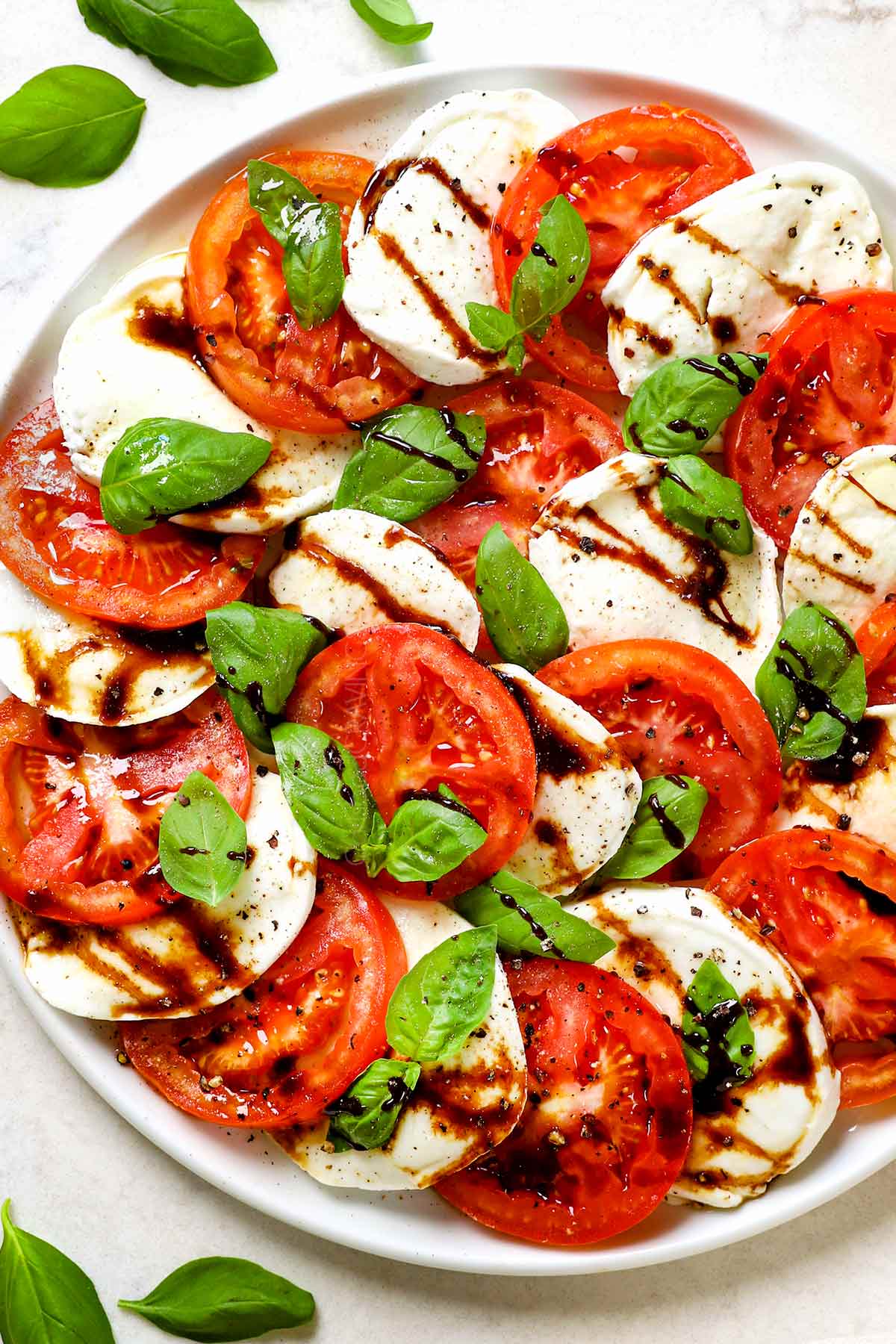

What is Balsamic Glaze?
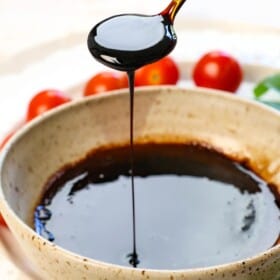
Balsamic glaze is a thick, syrupy sauce made by simmering balsamic vinegar until it reduces and concentrates. As the vinegar cooks, water evaporates, leaving behind a glossy glaze with a rich sweet-tart flavor.
BALSAMIC GLAZE VS BALSAMIC REDUCTION
•Balsamic reduction is simply balsamic vinegar simmered until reduced by about half and thickened to a consistency that coats a spoon.
•Balsamic glaze is typically slightly thicker than a reduction and often contains added sweeteners.

What type of balsamic is best to use?
For the best flavor, look for “Aceto Balsamico di Modena IGP” on the front label, and grape must be high on the ingredient list. The IGP certification ensures the vinegar was produced according to protected standards in the Modena region of Italy and typically has a smoother, richer flavor that’s ideal for reducing into a glaze.
You do NOT need an expensive aged balsamic. A good-quality IGP in the $10–$25 range is the sweet spot, such as Colavita Balsamic Vinegar IGP.
Avoid very inexpensive balsamic vinegars that list wine vinegar as the first ingredient and have little grape must—they tend to reduce into a sharper, harsher glaze.
No need for the ultra-expensive stuff: Don’t use Traditional Balsamic Vinegar of Modena DOP (the aged balsamic sold in small bottles for $80-$200+). It’s meant to be enjoyed as-is and is far too expensive to simmer down.
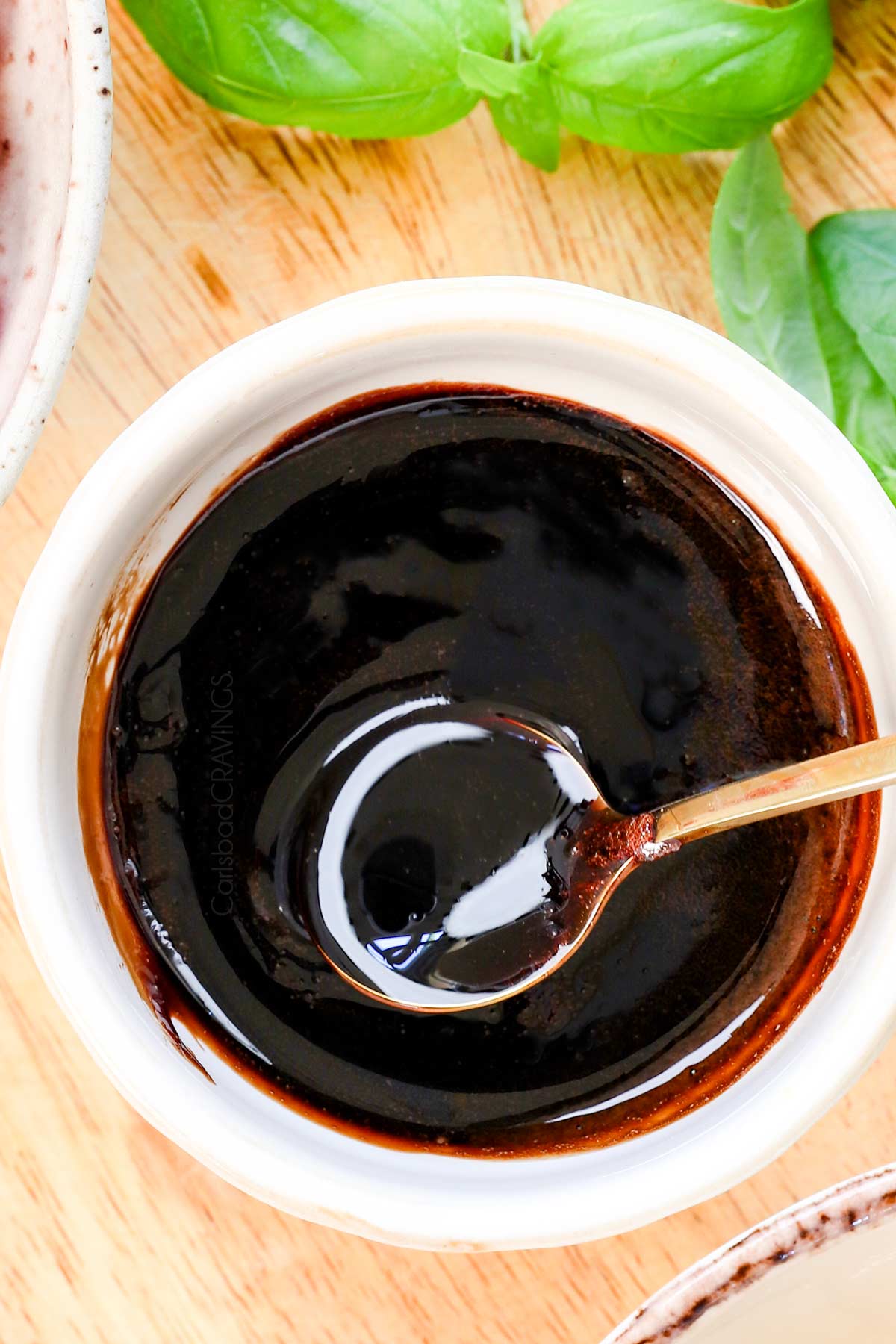

How to Make Balsamic Glaze
Let’s take a closer look at how to make this recipe with step-by-step photos (full recipe in the printable recipe card at the bottom of the post):
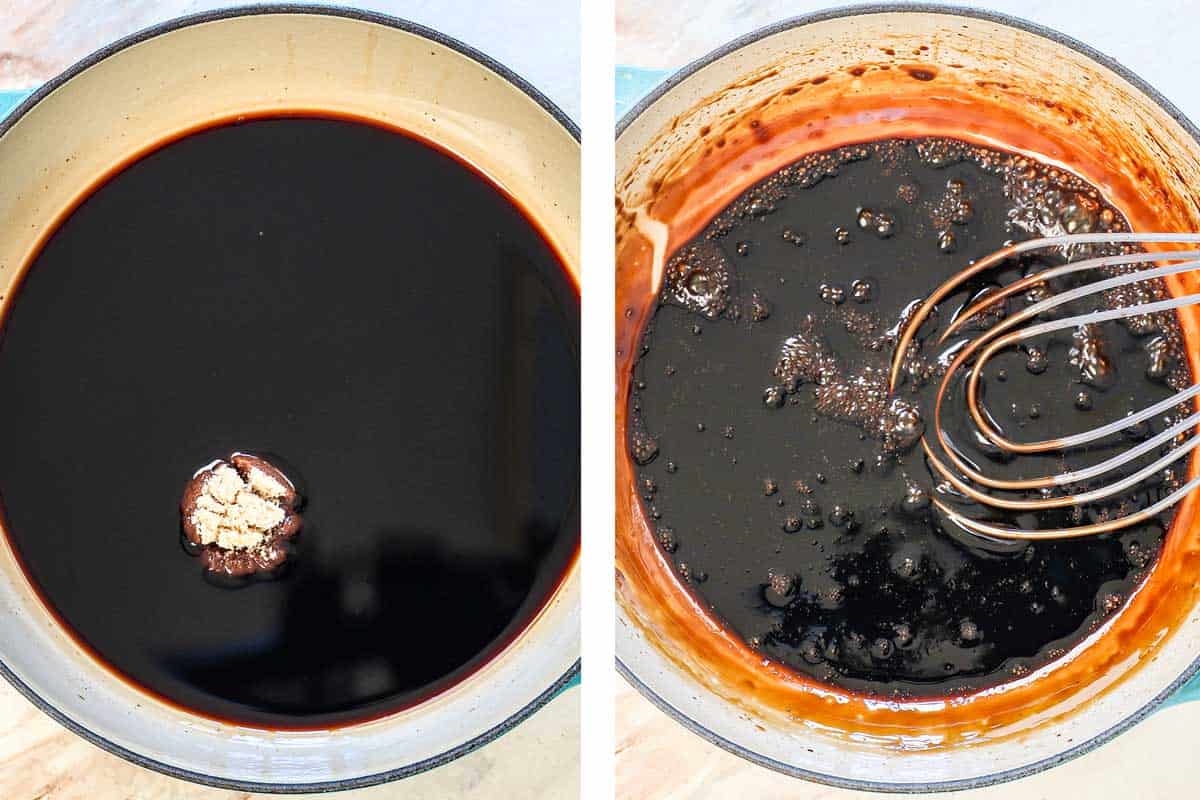
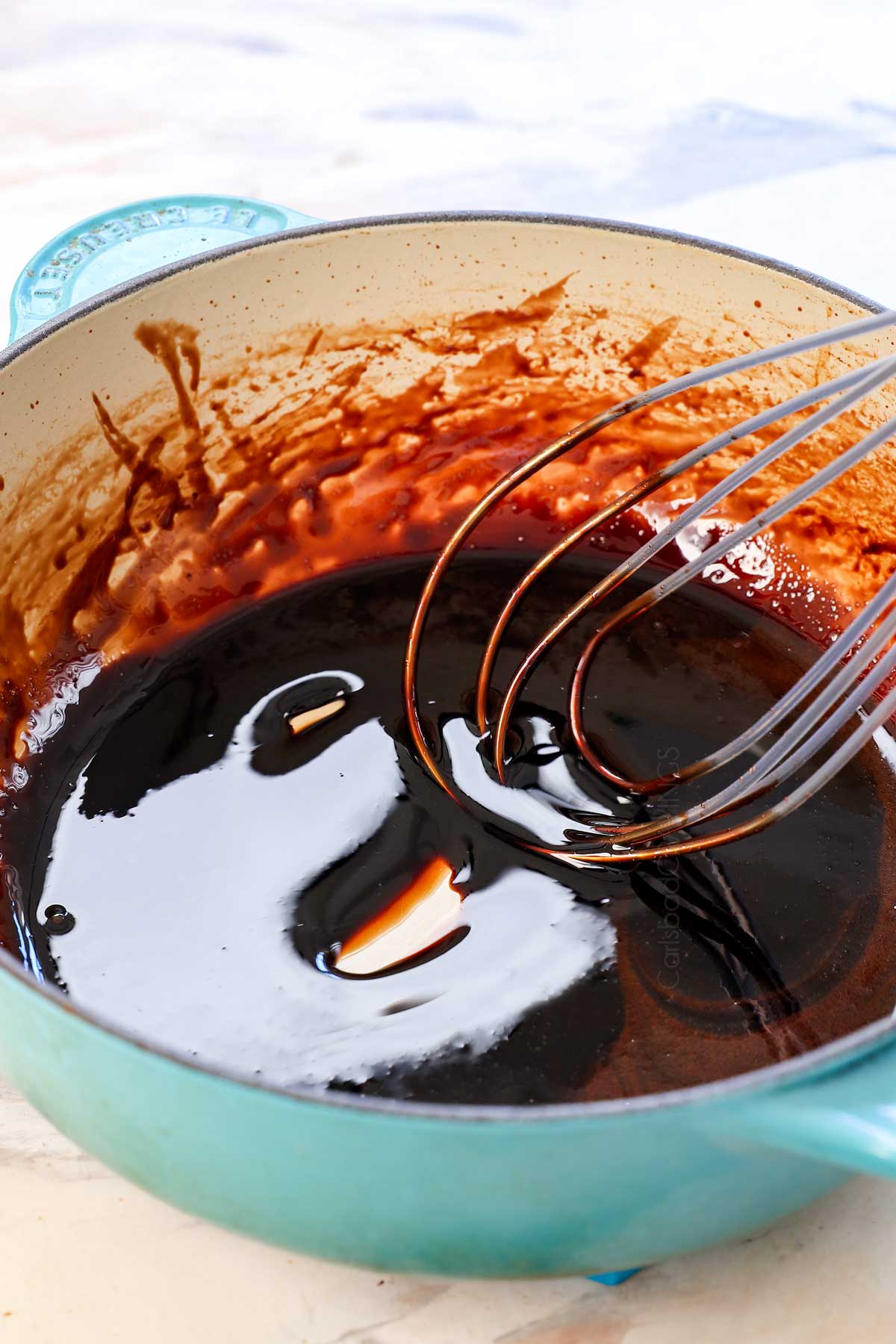
How Do I Know When Balsamic Reduction is Done?
The most common mistake is over-reducing the vinegar. The glaze is ready when:
•It coats the back of a spoon
•It has reduced by about half
•It still looks slightly thinner than you want in the pan
•Remember that balsamic glaze thickens considerably as it cools
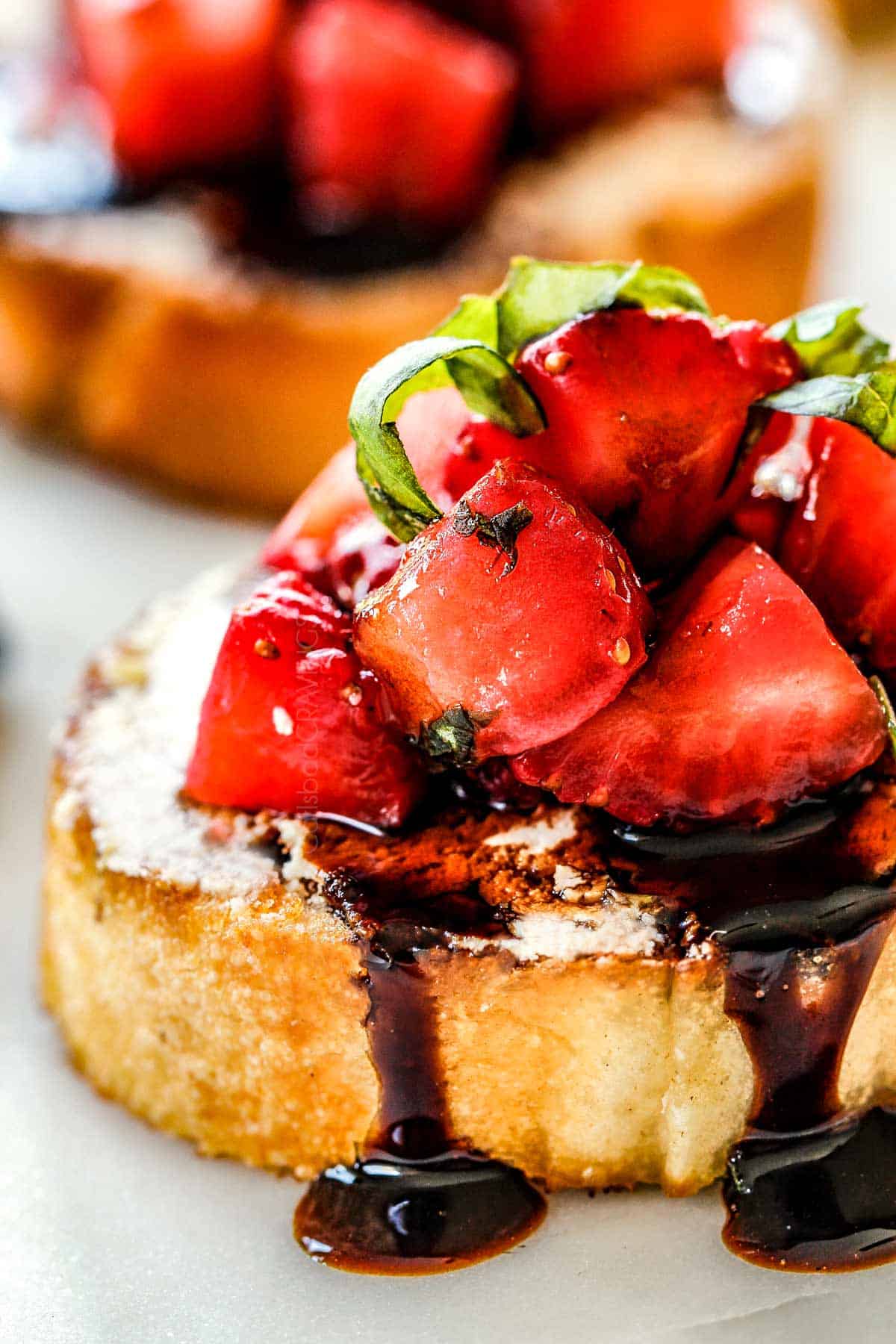

Tips for the Best Balsamic Glaze
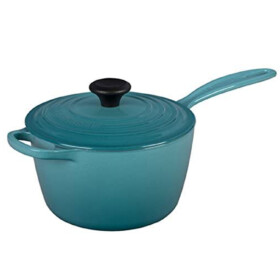
•Use a heavy-bottomed pan: A heavy saucepan, enameled cast iron, or other thick-bottomed pan helps distribute heat more evenly and prevents burning.
•Avoid high heat: A gentle simmer develops the best flavor and prevents scorching.
•Stir constantly: Keep the vinegar moving as it simmers so it reduces evenly and doesn’t scorch on the bottom of the pan.
•Remove it early: It’s better to remove the glaze slightly thin than too thick because it will continue to thicken as it cools.

variations
•Honey Balsamic Glaze: Add 2 tablespoons of honey while simmering instead of brown sugar.
•Garlic Balsamic Reduction: Add a smashed garlic clove while reducing, then discard before serving.
•Herb Balsamic Glaze: Simmer with fresh rosemary or thyme for extra flavor.
•Spicy Balsamic Glaze: Add a pinch of red pepper flakes for a subtle kick.
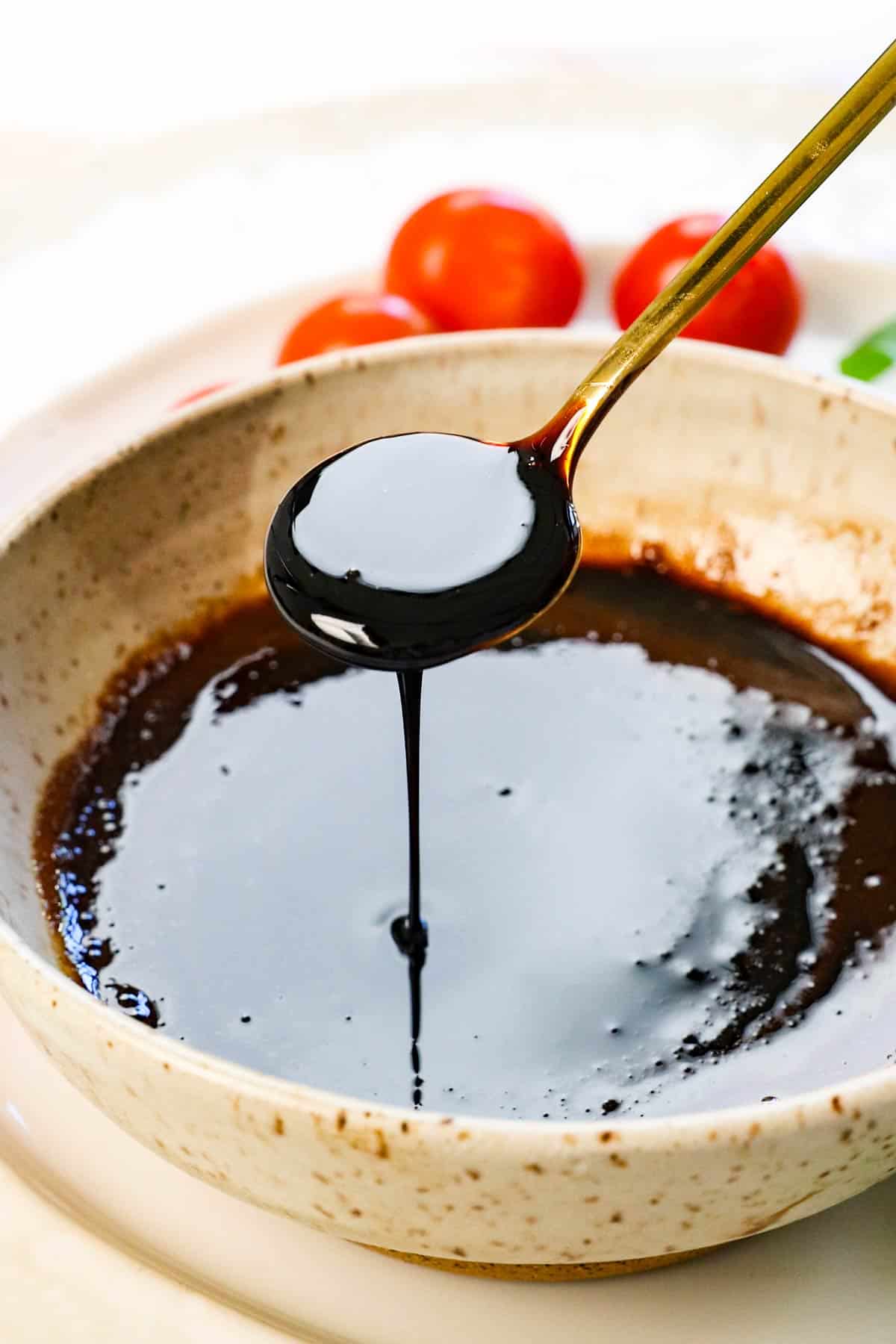

Ways to Use Balsamic Glaze
Balsamic glaze adds sweet, tangy flavor to countless dishes:
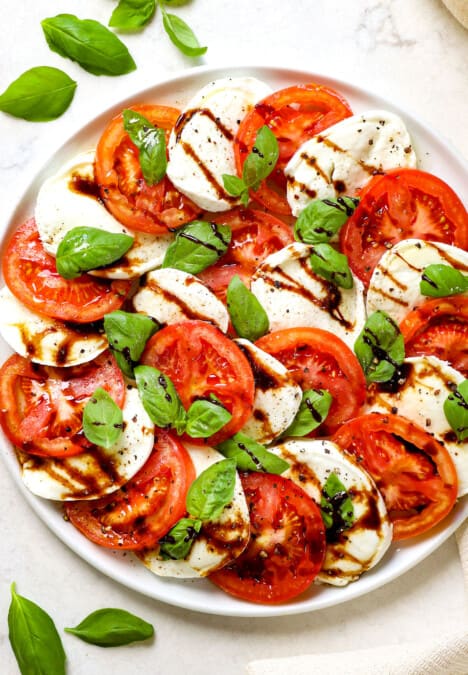
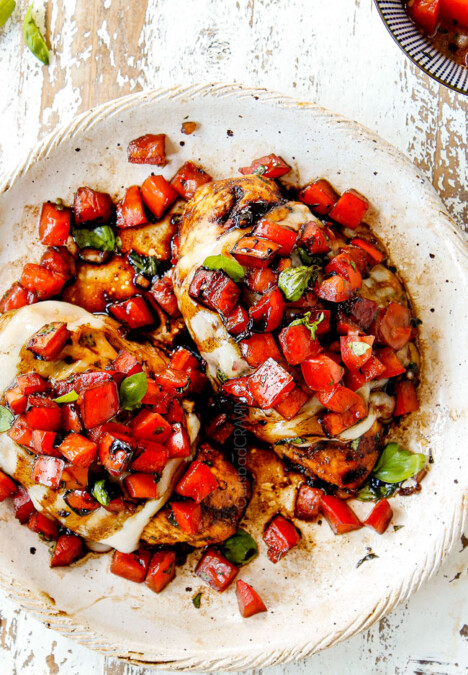
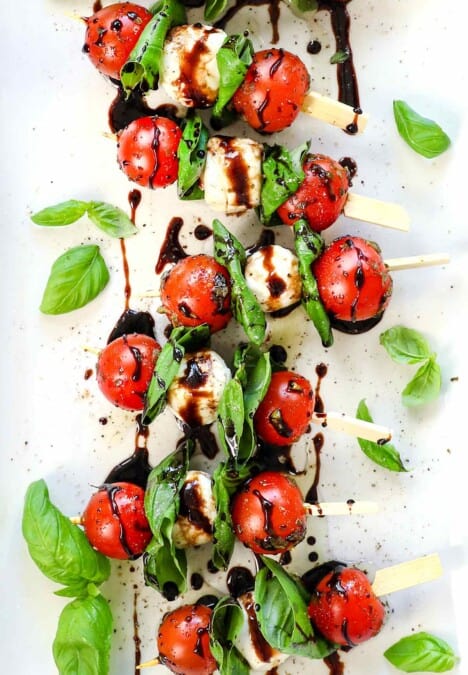
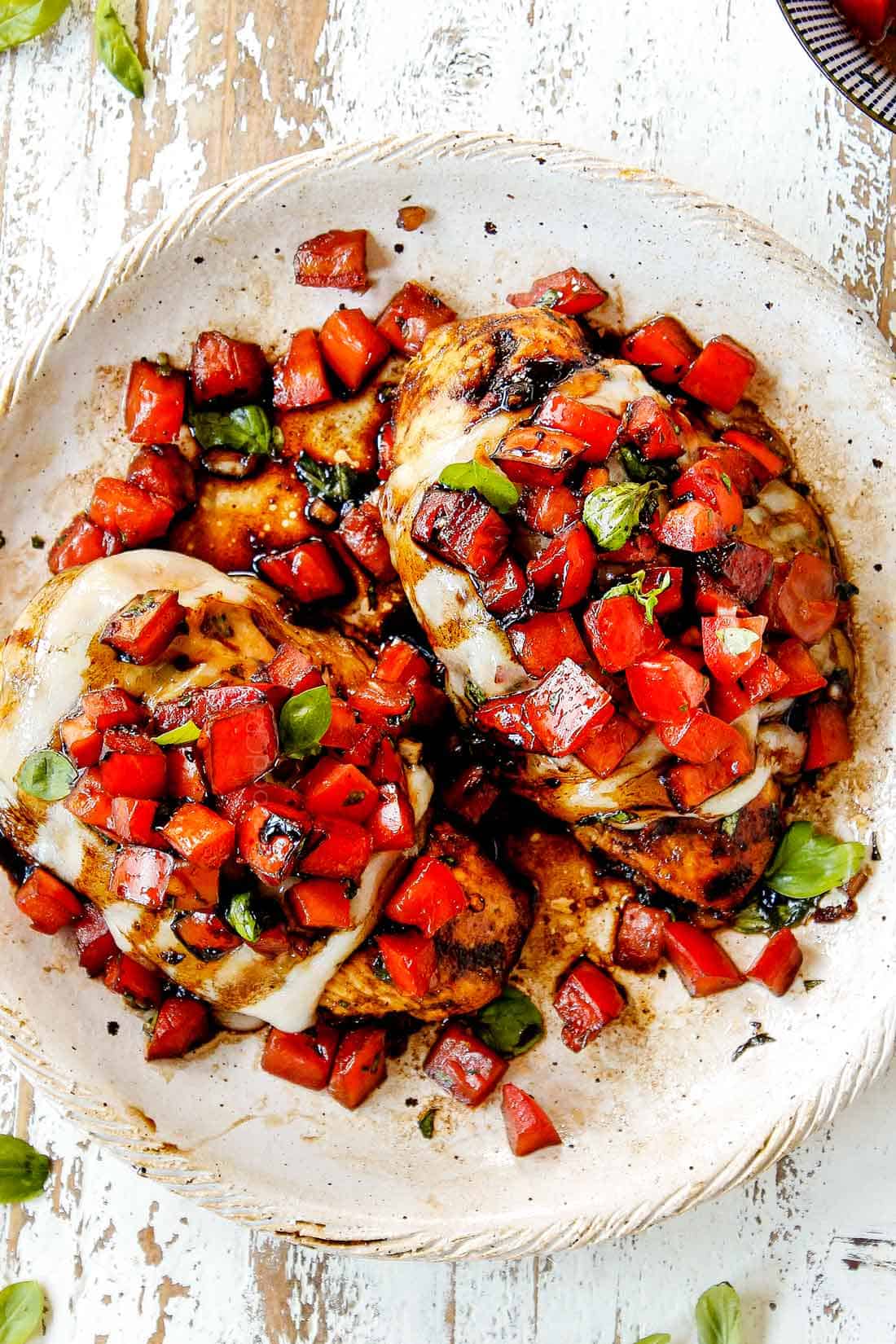
•Caprese: Caprese Skewers, Caprese Salad, Chicken Caprese
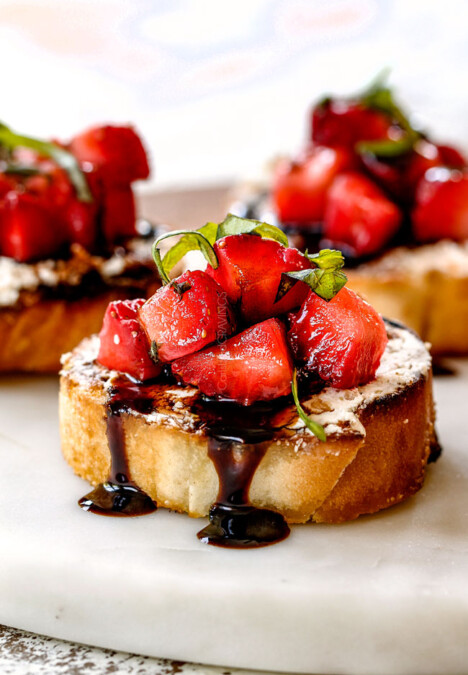
•Bruschetta: Tomato Bruschetta, Strawberry Bruschetta, Bruschetta Chicken
•Proteins: Grilled Chicken, Reverse Sear Steak, Pork Tenderloin
•Vegetables: Roasted Vegetables, Roasted Carrots, Asparagus. Brussels Sprouts
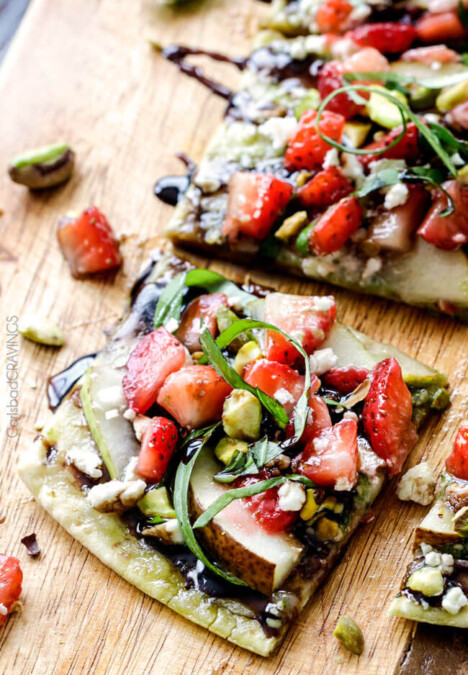
•Bread-Based Favorites: Pizza, flatbread, and avocado toast
•Fruit: Strawberries, Watermelon, Peach salads
Ways to Use Balsamic Glaze
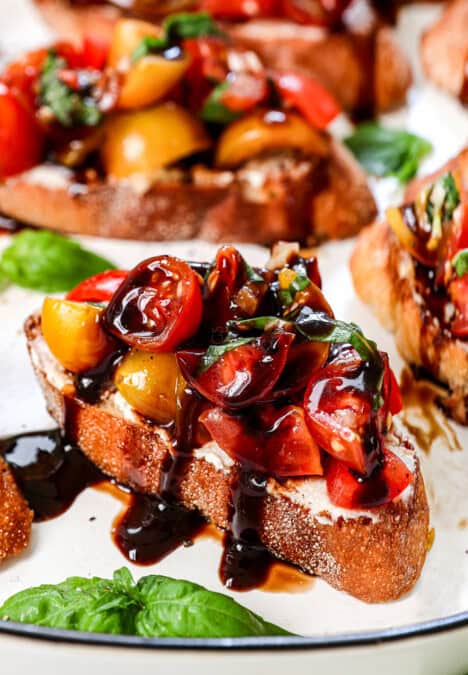

How to Store Balsamic Glaze
Transfer cooled glaze to an airtight container or jar and refrigerate for up to 1 month. If it becomes too thick after refrigeration, let it sit at room temperature or warm over low heat with a splash of water before using.
Balsamic Glaze FAQs
Essentially yes. Both are made by reducing balsamic vinegar until thickened, although some glazes contain added sweeteners.
Yes! Extra good-quality balsamic vinegar naturally sweetens as it reduces, so no sugar is necessary.
It likely needs additional simmering time. Continue reducing until it coats the back of a spoon.
It was reduced too long. Stir in a small amount of warm water until the desired consistency is reached.
Yes. Freeze in an airtight container for up to 3 months and thaw in the refrigerator before using.

WANT TO TRY THIS Balsamic Reduction RECIPE?
PIN IT to your recipe BOARD TO SAVE FOR LATER!
FIND ME ON PINTEREST FOR MORE GREAT RECIPES! I AM ALWAYS PINNING :)!
©Carlsbad Cravings by CarlsbadCravings.com
Tools Used in This Recipe
See Favorite Tools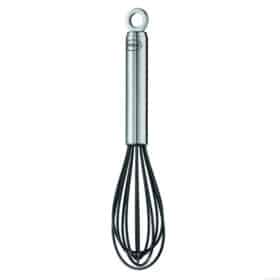
How to Make Balsamic Glaze
Save This Recipe To Your Recipe Box
You can now create an account on our site and save your favorite recipes all in one place!
Ingredients
- 1 cup balsamic vinegar
- 2 tablespoons light brown sugar
Instructions
- Combine: Whisk the vinegar and sugar together in a small nonreactive saucepan.
- Simmer: Bring the mixture to a simmer over medium heat, then reduce to a gentle simmer over medium-low, stirring often with a whisk. Simmer until the glaze coats the back of a spoon, approximately 8-10 minutes. Gradually reduce the heat towards the end as needed to maintain a gentle simmer. DON’T REDUCE TOO MUCH because it will thicken significantly off the heat. It should still look slightly thinner than you want in the pan
- Cool and Adjust: Remove from the heat and allow it to cool. If it thickens too much, add a splash of warm water, return to low heat, and whisk to combine (this works AMAZING). If it isn’t thick enough, return to a gentle simmer to reduce more.
Notes
The Best Balsamic to Use
- For the best flavor, look for “Aceto Balsamico di Modena IGP” on the front label, and grape must be high on the ingredient list. The IGP certification ensures the vinegar was produced according to protected standards in the Modena region of Italy and typically has a smoother, richer flavor that’s ideal for reducing into a glaze.
- You do NOT need an expensive aged balsamic. A good-quality IGP in the $10–$25 range is the sweet spot, such as Colavita Balsamic Vinegar IGP.
- Avoid very inexpensive balsamic vinegars that list wine vinegar as the first ingredient and have little grape must—they tend to reduce into a sharper, harsher glaze.
- No need for the ultra-expensive stuff: Don’t use Traditional Balsamic Vinegar of Modena DOP (the aged balsamic sold in small bottles for $80-$200+). It’s meant to be enjoyed as-is and is far too expensive to simmer down.
storage
Transfer cooled glaze to an airtight container or jar and refrigerate for up to 1 month. If it becomes too thick after refrigeration, let it sit at room temperature or warm over low heat with a splash of water before using.ways to use
- Caprese: Caprese Skewers, Caprese Salad, Chicken Caprese
- Bruschetta: Tomato Bruschetta, Strawberry Bruschetta, Bruschetta Chicken
- Vegetables: Roasted Vegetables, Roasted Carrots, Asparagus. Brussels Sprouts
- Bread-Based Favorites: Pizza, flatbread, and avocado toast
- Fruit: Strawberries, Watermelon, Peach salads
Want To Make This Recipe?

Did You Make This Recipe?
Tag @CarlsbadCravings and Use #CarlsbadCravngs
Leave a Review, I Always Love Hearing From You!



Tina says
This is the best drizzle for salads or caprese salads. I made enough to have extra in fridge.
Jen says
Hi Tina! I’m so glad you loved it! It’s one of my favorite dressings to keep on hand too, and I love that you made extra to have in the fridge! Thanks for taking the time to share your kind words!
Erin C says
Kinda the best dressing, sweet, savory, balsamicy, and goes with everything. I can’t believe it is so easy to make too.
Jen says
Hi Erin! Thank you so much! I’m thrilled you loved it! I’m so glad it’s earned a spot as a go-to dressing for you. Thanks for taking the time to leave such a kind review!