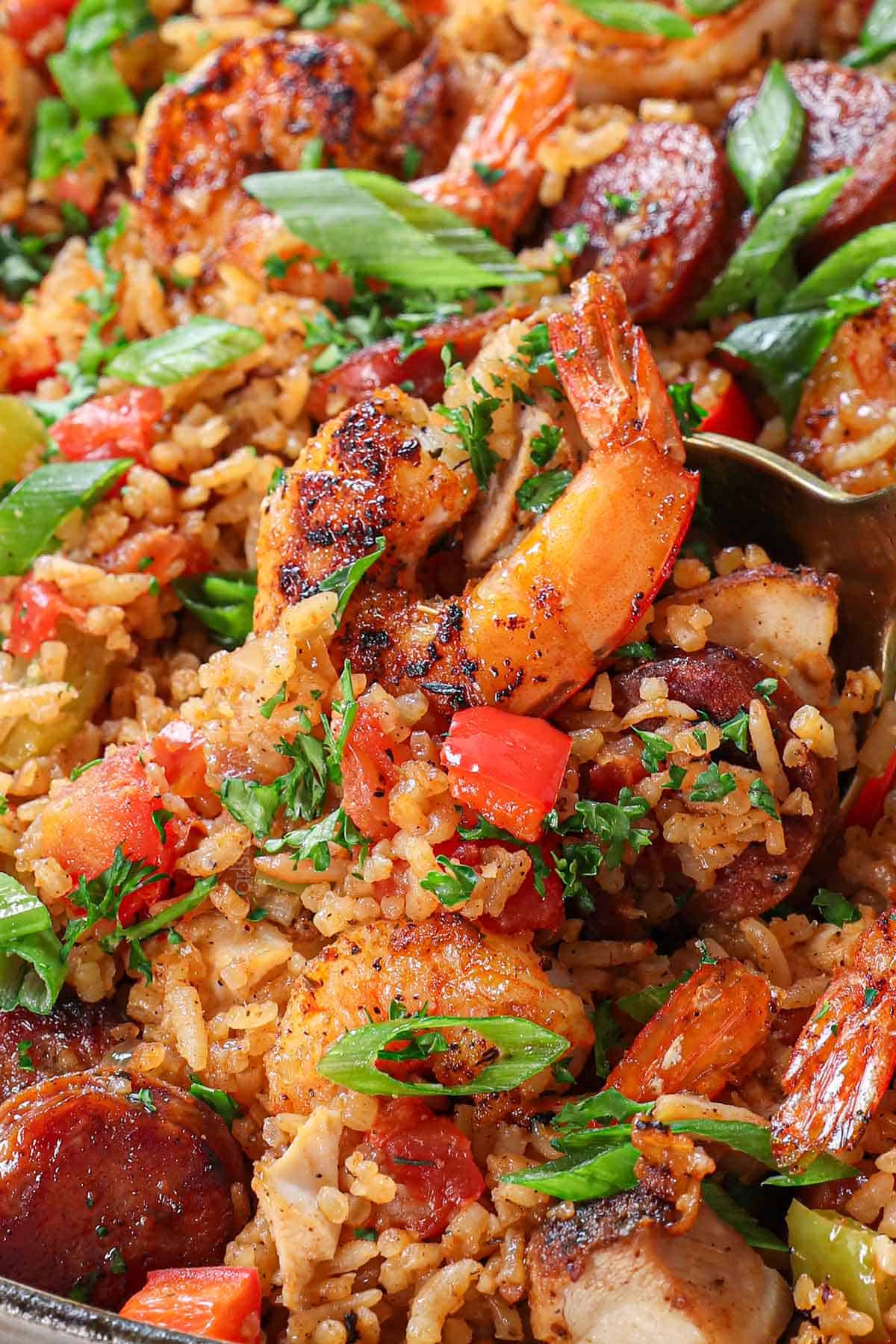
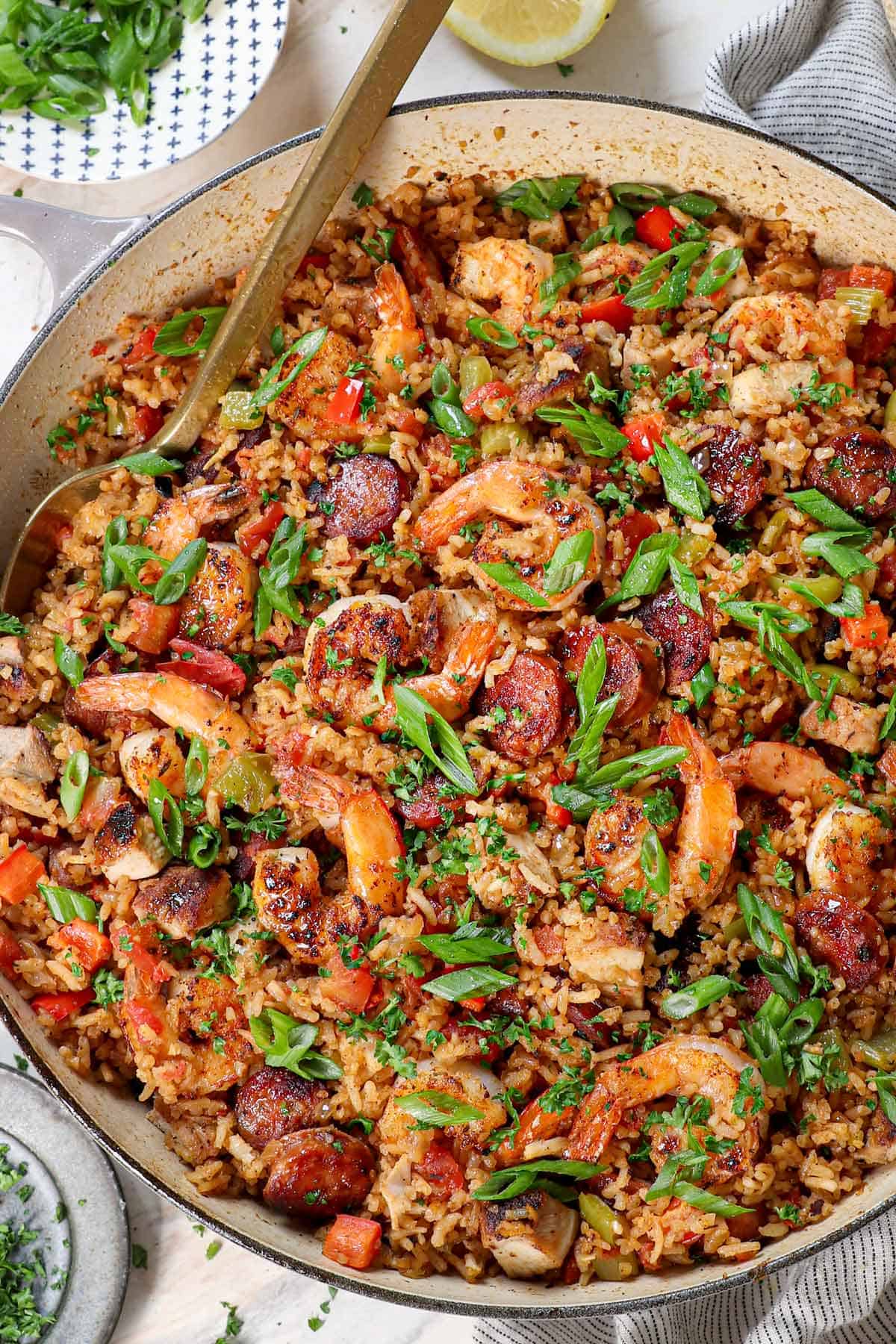
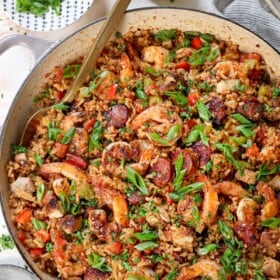
This jambalaya recipe is a flavor-packed celebration of Cajun cooking that’s bold, satisfying, and sure to impress. Every element—from seasoned, pan-seared shrimp to oven-baked rice and perfectly browned sausage and chicken—is expertly prepared to maximize flavor and texture (no mushy rice!).
Follow along for tips, variations, and step-by-step photos for a recipe in a league of its own!
Watch How To Make Jambalaya


This is the BEST Jambalaya Recipe!

But first…What IS Jambalaya?
Jambalaya is a vibrant, flavor-packed one-pot dish that hails from Louisiana’s Creole and Cajun kitchens! With rice cooked right in a mix of meats, seafood, vegetables, and bold spices, it’s a hearty, comforting meal that bursts with Southern charm in every bite. Perfect for family dinners, gatherings, or anytime you want a taste of Louisiana in your own kitchen!

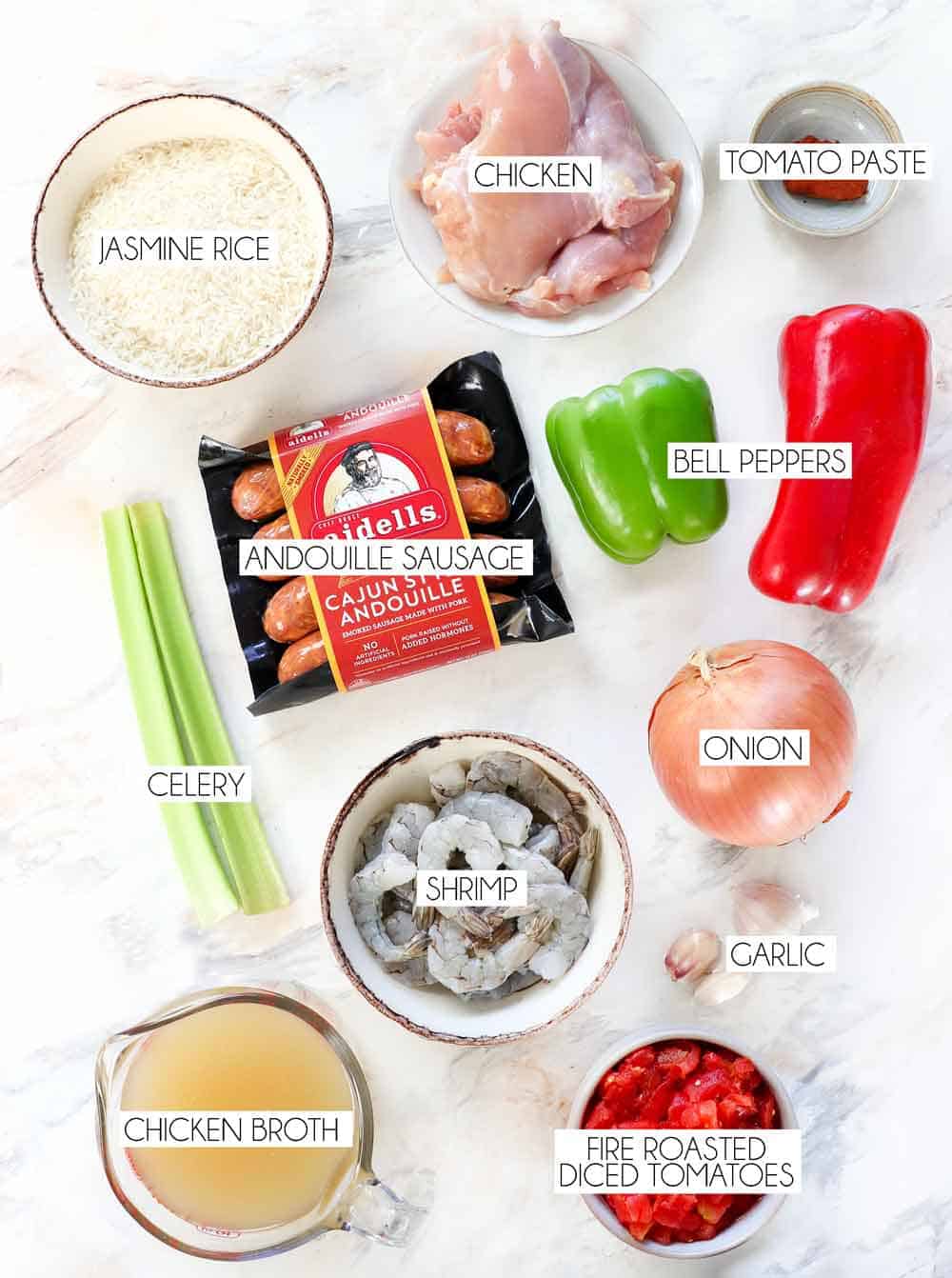
Cajun Jambalaya ingredients
Let’s take a closer look at what you need to make this recipe (measurements in the printable recipe card at the bottom of the post):
The Meats
The Rice and Veggies
Jambalaya seasoning
Jambalaya is seasoned with a mix of signature Cajun spices, creating a bold, aromatic blend. It includes smoked paprika, cayenne pepper, garlic powder, onion powder, thyme, oregano, salt, and black pepper. Making your own Cajun seasoning allows you to control the heat and the salt.

How to Make Jambalaya
Let’s take a closer look at how to make this recipe with step-by-step photos (full recipe in the printable recipe card at the bottom of the post):


Tips for making this Recipe for Jambalaya

Homemade Jambalaya variations

How to serve this Cajun Jambalaya
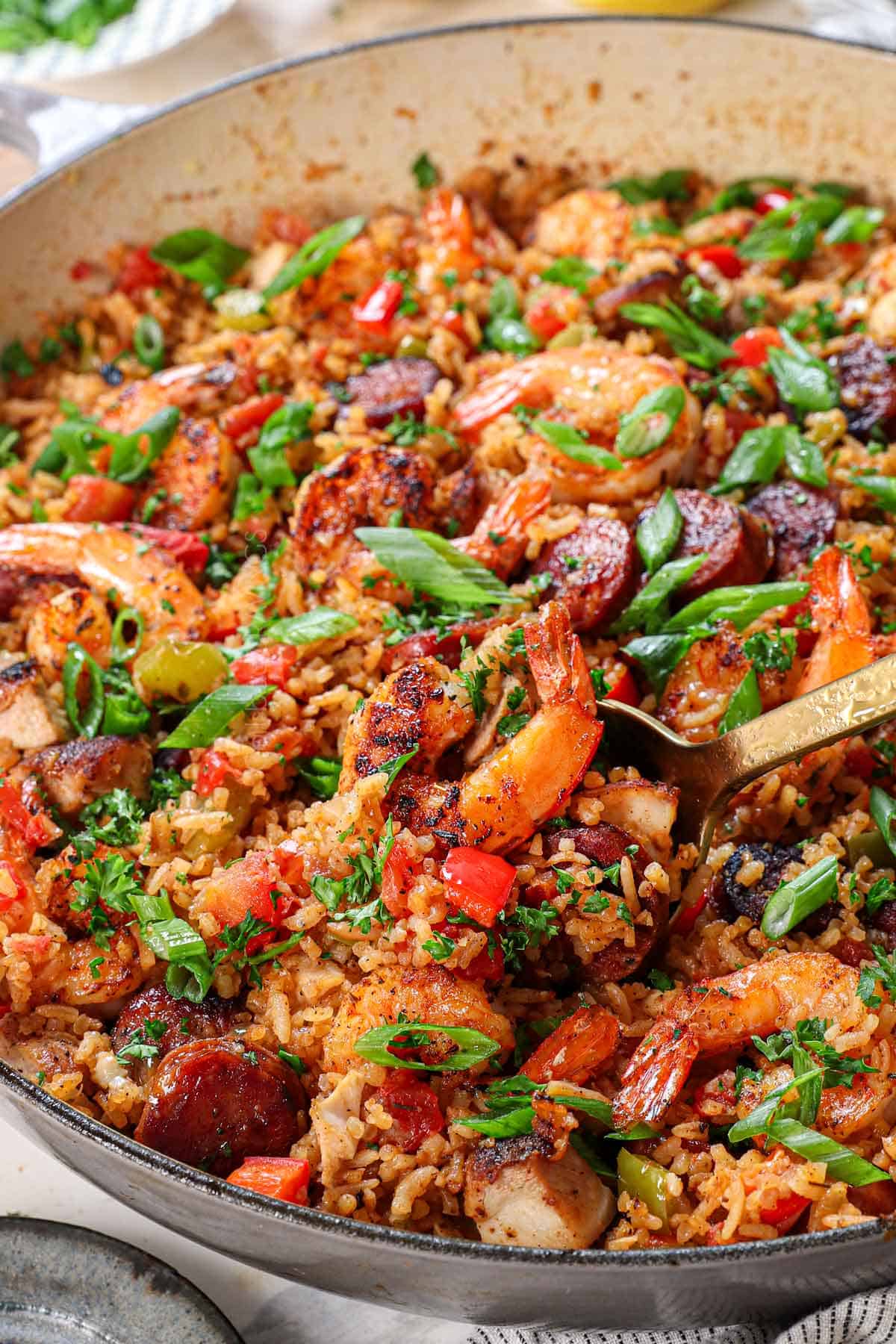
Serve jambalaya hot and fresh. Fluff the rice gently with a fork, then top with sliced green onions and a dash of hot sauce if desired.
What to serve with Jambalaya
Homemade Jambalaya storage tips & FAQs
Jambalaya will keep in the refrigerator for 3–4 days when stored in an airtight container. For best quality and food safety, let it cool completely before refrigerating and reheat until steaming hot throughout. It also freezes well for longer storage if needed.
Yes — jambalaya freezes very well. Let it cool completely, then store it in airtight, freezer-safe containers or bags for up to 3 months. Thaw overnight in the refrigerator, then reheat gently, adding a splash of broth or water as needed to loosen the rice.
Jambalaya reheats easily and stays flavorful with a little moisture added. Reheat individual portions in the microwave, covered, stirring halfway through, until hot, adding a splash of water or broth if needed. For larger amounts, reheat gently on the stovetop over medium-low heat, stirring often and adding liquid as needed, until warmed through.
Jambalaya and gumbo are both Louisiana classics, but they’re very different dishes. In short: jambalaya = rice cooked in the dish; gumbo = stew poured over rice. Here’s the deets:
Jambalaya is a one-pot rice dish in which rice is cooked with meat, vegetables, and seasonings. It’s thick, hearty, and more like a savory casserole or pilaf, with bold Cajun or Creole flavors.
Gumbo is a stew or soup that starts with a roux and is served over rice, not cooked with it. It’s brothier, deeply rich, and often includes seafood, chicken, or sausage.
Jambalaya is moderately spicy, not fiery hot. It’s traditionally seasoned with Cajun or Creole spices that add warmth and depth rather than overwhelming heat, and the spice level can be easily adjusted up or down depending on the amount of cayenne or hot sauce used.
No, you don’t need to cook the shrimp in advance. You can add raw shrimp near the end of cooking; however, it tastes better if you pan-sear it first.
No — in traditional jambalaya, you don’t cook the rice first. The rice is added raw and cooks in the pot with the meat, vegetables, and seasonings, absorbing all the flavors and creating a rich, cohesive dish.
Jambalaya is supposed to be thick and hearty, not soupy. The rice absorbs the flavorful broth as it cooks, creating a cohesive, slightly moist dish that holds together rather than a watery stew.
The Cajun Holy Trinity is a classic base of three vegetables used in Cajun and Creole cooking: onions, bell peppers, and celery. It’s the foundation for dishes like jambalaya, gumbo, and étouffée, providing depth, aroma, and flavor

WANT TO TRY THIS Jambalya RECIPE?
PIN IT to your recipe BOARD TO SAVE FOR LATER!
FIND ME ON PINTEREST FOR MORE GREAT RECIPES! I AM ALWAYS PINNING :)!
©Carlsbad Cravings by CarlsbadCravings.com

Cajun Jambalaya Recipe
Save This Recipe To Your Recipe Box
You can now create an account on our site and save your favorite recipes all in one place!
Ingredients
CAJUN SEASONINGS
- 1 1/2 tsp EACH smoked paprika, garlic powder, onion powder
- 1 teaspoon salt
- 1/2 tsp EACH dried thyme, dried oregano, pepper
- 1/4-1/2 teaspoon cayenne pepper
Jambalaya
- 3 tablespoons olive oil, divided
- 12 ounces Cajun/andouille sausage sliced 1/4-inch thick (pork or chicken)
- 1 pound boneless, skinless chicken thighs or breasts
- 12 ounces raw large shrimp, shelled, deveined, patted dry
- 2 tablespoons unsalted butter
- 1 1/2 cups uncooked long grain jasmine rice, thoroughly rinsed and drained
- 1 yellow onion, chopped
- 1 green bell pepper, chopped
- 1 red bell pepper, chopped
- 2 stalks celery, chopped
- 4 cloves garlic, minced
- 1 tablespoon tomato paste
- 2 3/4 cups low sodium chicken broth
- 1 15 oz. can fire roasted diced tomatoes, not drained
- 1 bay leaf
- 1 tablespoon lemon juice
Garnishes
- Green onions
- Fresh parsley
- Hot sauce
Instructions
- Prep: Preheat the oven to 325°F. Mix the Cajun Seasonings in a small bowl.
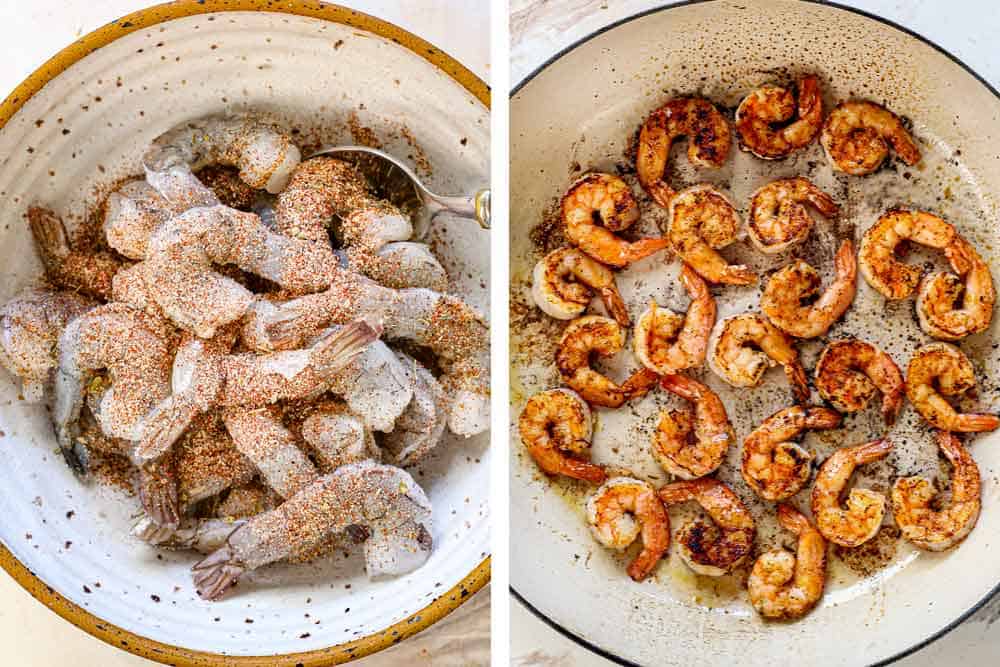
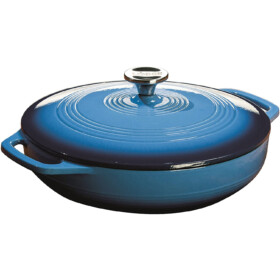
- Cook Shrimp: Toss the shrimp with 1 ½ teaspoons Cajun Seasoning in a medium bowl. Heat 1 tablespoon of oil in a 3.5 qt (or larger) braiser or Dutch oven over medium-high heat until shimmering. Cook the shrimp in an even layer just until opaque, about 2 minutes per side. Remove the shrimp to a plate using tongs. You can chop the shrimp tails off once they're cool enough to handle, if desired. Set aside until the end.
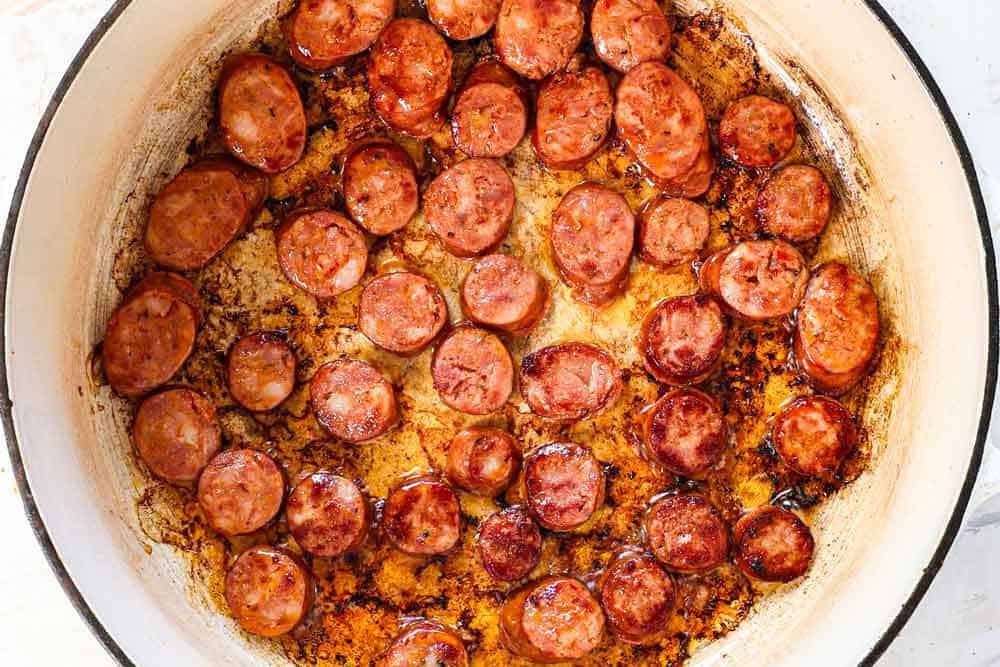
- Cook Sausage: Add the sausage to the pan in an even layer over medium heat. Brown on both sides, then transfer to a plate.
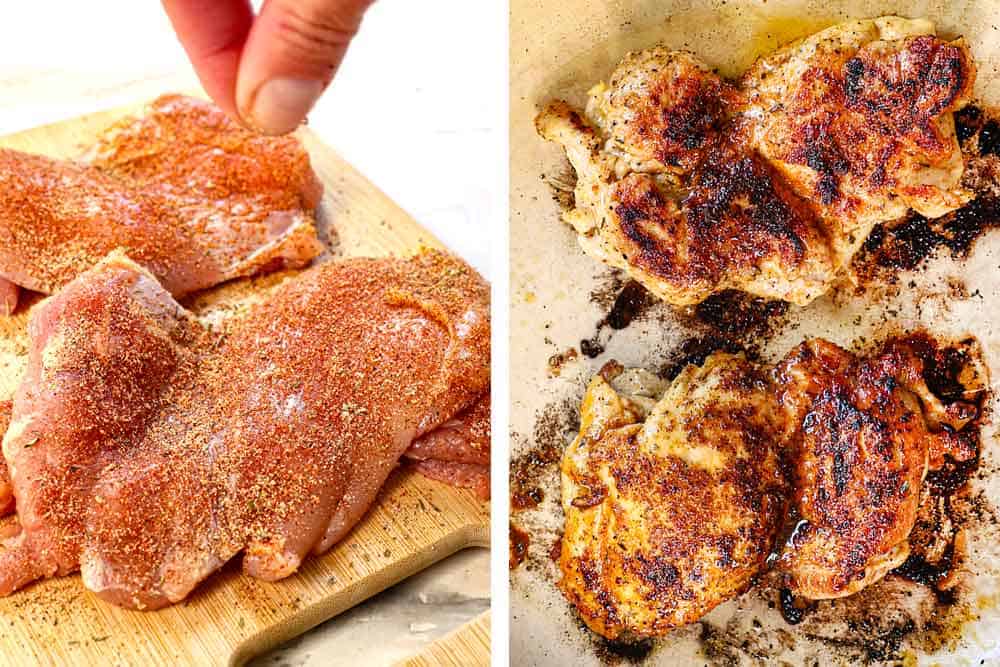
- Season the Chicken: If using breasts, cover with plastic wrap and pound to an even thickness. Evenly season the chicken with 2 teaspoons of Cajun seasoning.
- Cook the Chicken: Heat 2 tablespoons of oil in the sausage drippings over medium-high heat until shimmering. Add the chicken, and reduce the heat to medium. Cook until the internal temperature reaches 160 degrees F, about 5-7 minutes per side. Transfer the chicken to a cutting board and let it rest for at least 5 minutes before cutting it into 1/2-inch chunks. Set aside until the end.
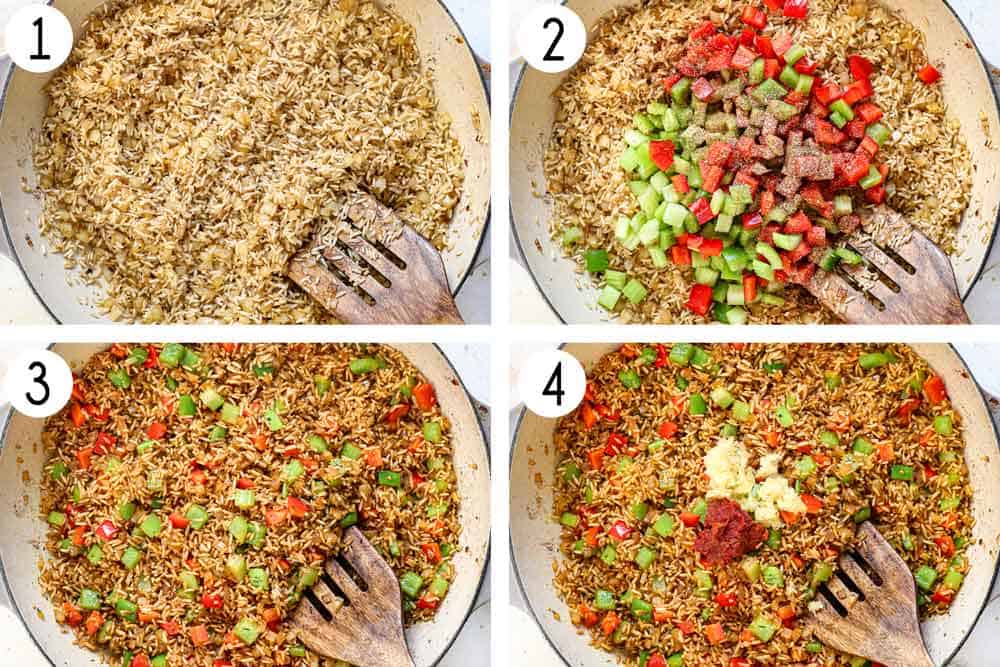
- Sauté Rice and Vegetables: Melt 2 tablespoons of butter in the drippings over medium heat. Add the rice and onions and sauté for 3 minutes. Add the bell peppers, celery, and the remaining Cajun Seasoning, and sauté for 3 additional minutes (the onions should be softened). Add the tomato paste and garlic and sauté for 60 seconds.
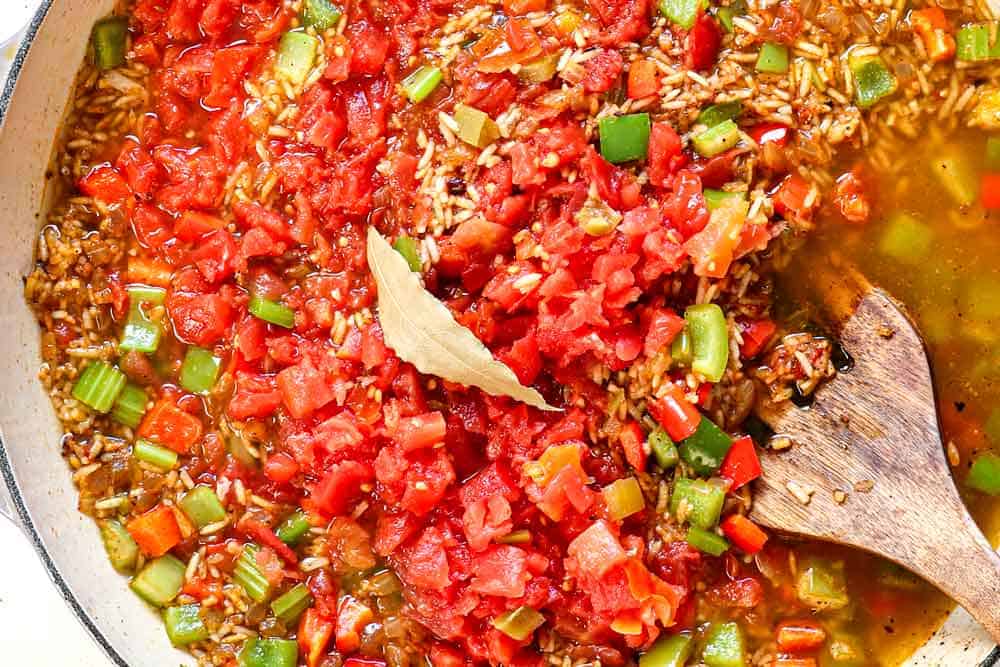
- Add Ingredients: Add the broth, bay leaf, and tomatoes, and stir to combine.
- Bake: Bring to a simmer over medium heat, uncovered. Stir everything, cover it, and place it in the oven. Bake for 10 minutes, then carefully check the rice for tenderness. If the rice isn't done, bake for an additional 2-5 minutes, or until cooked through, adding additional broth if needed.
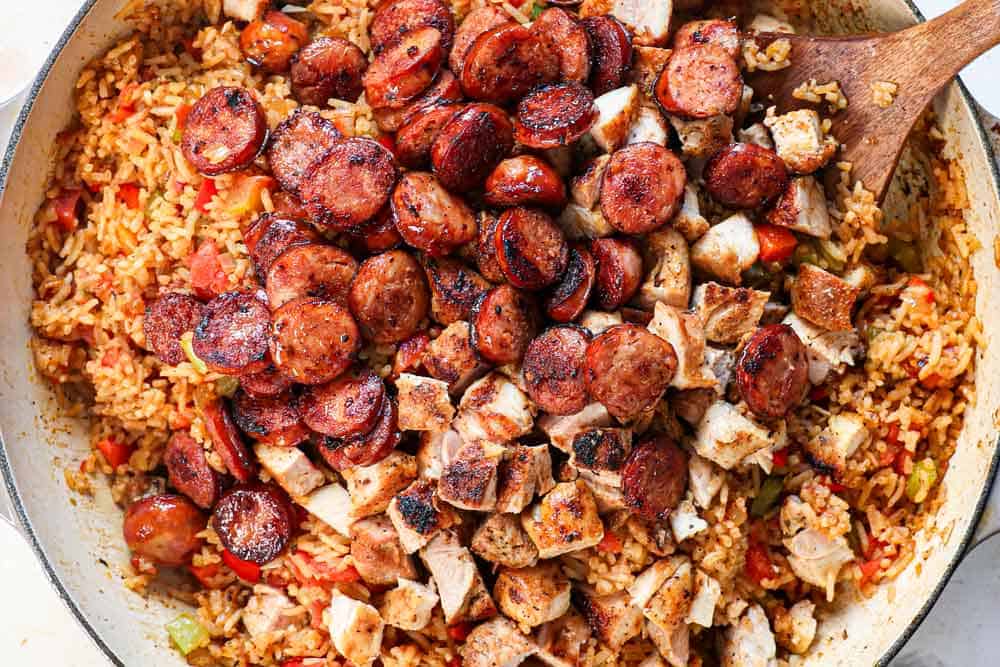
- Add Meats and Rest: Remove the pot from the oven, stir in the lemon juice, chicken, and sausage. (The rice will firm up as it rests – see science in post.) Top the rice with the shrimp, cover, and rest for 10 minutes undisturbed.
- Garnish: Fluff with a fork, then serve hot, with sliced green onions and salt or hot sauce to taste.
Video
Want To Make This Recipe?

Did You Make This Recipe?
Tag @CarlsbadCravings and Use #CarlsbadCravngs
Leave a Review, I Always Love Hearing From You!

Tanya Jackson says
Jambalaya had been a family favorite tradition and one of my favorite feel good foods. I made your recipe for my roommates, and it was delicious and felt like home cooking my mom makes. The spices and flavors were perfect. I love this recipe!
Jen says
That’s wonderful to hear Tanya! I’m so glad this recipe brought that cozy, home-cooked feeling to your kitchen – and that’s so kind of you to share with your roommates!