This post may contain affiliate links. Please read our disclosure policy.
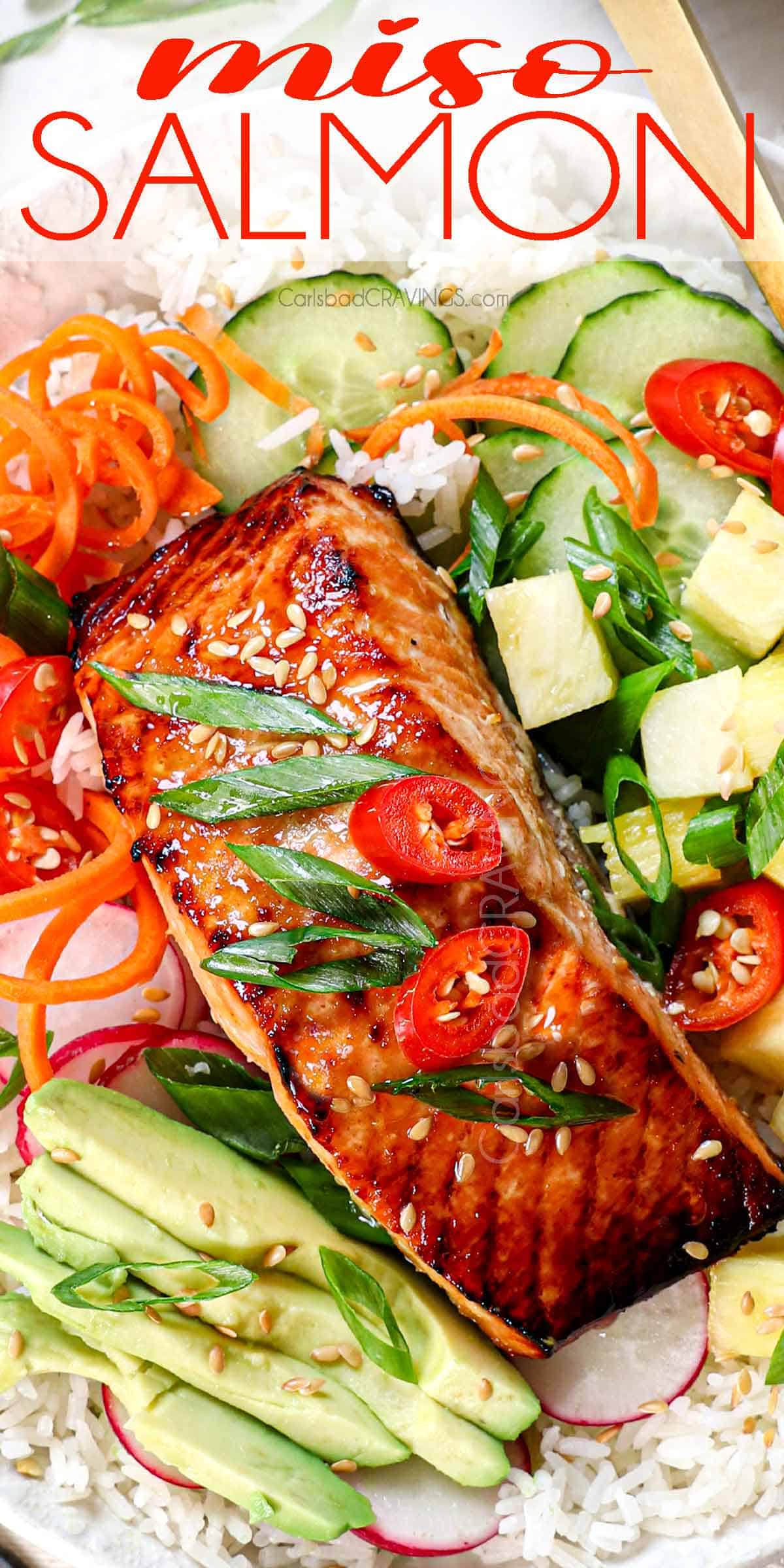
After testing countless variations, I perfected this miso salmon recipe to achieve the ideal balance of savory, sweet, and mildly spicy flavors—you will be obsessed! The glaze is rich and umami-packed (no one-note recipe here!), the salmon stays perfectly juicy, and the finishing broil gives it that irresistible caramelized finish. Best of all, it’s SO EASY!
Follow along for step-by-step photos, expert tips, variations, and serving ideas to achieve restaurant-quality salmon every time.
After carefully testing, I perfected the balance of flavors and cooking method, making this the best miso salmon you’ll ever try—this attention to detail is what truly sets it apart:
Bold, umami-packed flavor: The white miso, soy sauce, and spices create a rich, savory base, balanced with rice vinegar, rice wine, brown sugar, and a touch of chili sauce for sweet, tangy, and mildly spicy depth.
Best baking method for juicy, caramelized salmon: Bake the marinated salmon at a moderate temperature until nearly done, then broil for the last few minutes to create a signature caramelized, slightly crispy glaze while keeping the fish tender and moist inside.
No double work: The marinade is cleverly divided—part flavors the salmon, and the rest is transformed into a glaze with a bit of honey and water, so you get maximum flavor with minimal effort.
Customizable heat and sweetness: Easily adjust with extra chili sauce or honey to suit your taste.
Crowd-pleasing and restaurant-worthy: Impressive enough for dinner guests, yet simple enough for weeknight meals.
Miso Salmon Ingredients
Let’s take a closer look at what you need to make this recipe (measurements in the printable recipe card at the bottom of the post):
Salmon fillets: Choose evenly sized, skin-on fillets so they cook at the same rate; the skin helps protect the flesh and keeps it juicy and tender. I typically purchase mine at the seafood counter as a larger fillet and have them cut it into 4 pieces.
White miso: A mild, slightly sweet fermented soybean paste that delivers rich umami without being overpowering. Find it in the refrigerated section near tofu or in the Asian foods aisle, or purchase it on Amazon here.
Soy sauce: Always use low-sodium soy sauce here, as the white miso already adds plenty of salt.
Rice wine:I use “Kikkoman Aji-Mirin: Sweet Cooking Rice Seasoning”, commonly found in the Asian section of most grocery stores, or you can buy it on Amazon. I suggest you Google images before you head off to the grocery store so you know exactly what you are looking for.
Rice vinegar: Brightens the marinade with mild acidity, preventing the flavors from feeling too heavy. Use unseasoned.
Brown sugar: Softens the savory notes and helps the salmon caramelize beautifully as it cooks.
Toasted sesame oil: Use toasted, not regular, sesame oil for its deep, nutty flavor; it’s usually located in the Asian foods aisle.
Spice blend: Garlic powder, ground ginger, paprika, and ground mustard create subtle warmth and depth that complements the miso glaze without masking the salmon’s natural flavor.
How to Make Miso Salmon
Let’s take a closer look at how to make this recipe with step-by-step photos (full recipe in the printable recipe card at the bottom of the post):
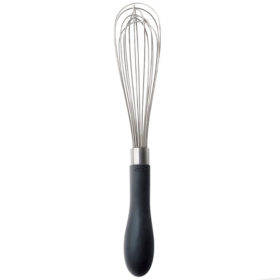
Step 1: Make Marinade & Glaze. Whisk the marinade ingredients together in a small bowl. Reserve 3 tablespoons for the Glaze and add 2 tablespoons of water and 1 teaspoon of honey.
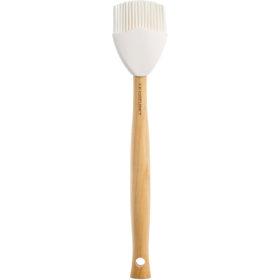
Step 2: Marinate Salmon. Place the salmon in a shallow dish (such as a 9×9 baking dish), skin-side down. Brush the marinade onto the top and sides of the salmon. Cover and refrigerate for 1–3 hours.
Step 3: Bake. Insert a digital probe thermometer. Bake uncovered at 400°F for 8-10 minutes, depending on thickness. Next, broil for 3-5 minutes, or until the salmon reaches 125-130°F at the thickest part.
Step 4: Glaze. Brush the salmon with the desired amount of the reserved Glaze. Garnish with green onions and toasted sesame seeds if desired.
Miso Glazed Salmon TIPS
Adjust the marinating time based on thickness: Marinate thicker salmon fillets for 3 hours, while thinner fillets (about 1 inch) need only 1–2 hours.
Don’t over-marinate: Miso is already salty and fermented, so a short marinating time (see above) adds flavor without overcooking the salmon or making it mushy.
Briefly bring the salmon to room temperature:Letting it finish marinating at room temperature ensures more even cooking from edge to center.
Don’t overcook the salmon: Cook just until the internal temperature reaches 125–130°F, when the salmon is tender, juicy, and perfectly flaky—any hotter and it can quickly turn dry.
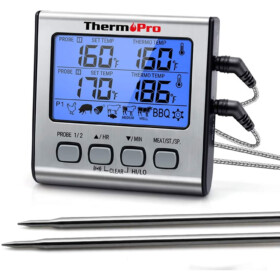
Use a digital probe thermometer: Cooking with a probe thermometer (pictured) lets you monitor the salmon as it cooks, so you can pull it from the oven at the perfect temperature every time—no guessing, no overcooking, just consistently juicy results.
Customize the glaze to taste: Adjust the sweetness or heat by adding a drizzle of honey for a touch more sweetness or extra Asian chili sauce for more kick, tasting as you go.
Miso Marinated Salmon variations
Honey miso salmon: Add extra honey for a sweeter, more caramelized glaze.
Maple miso salmon: Swap honey or brown sugar for maple syrup for a deeper, cozy sweetness.
Soy-free miso salmon: Use coconut aminos instead of soy sauce for a slightly sweeter, soy-free option.
Spicy miso salmon: Increase the Asian chili sauce.
Ginger-forward miso salmon: Add fresh grated ginger to the marinade for brighter, punchier flavor.
Citrus miso salmon: Finish with fresh lime or orange juice/zest.
Garlic miso salmon: Add minced fresh garlic for a sharper, more savory bite.
Air fryer miso salmon: Preheat the air fryer to 400°F, place the marinated salmon fillets skin-side down in the basket, and cook for 8–10 minutes (depending on thickness) until the internal temperature reaches 125–130°F.
How to serve Miso Glaze Salmon
Grain bowls: Serve over jasmine rice with your choice of fresh vegetables (e.g., carrots and cucumber), sautéed vegetables (e.g., spinach, edamame, and/or broccoli), avocado, radishes, and mango or pineapple.
Wraps: Add slices of avocado, and your favorite veggies like cucumbers and carrots, and a drizzle of sriracha mayo.
Salads: Top mixed greens with your favorite veggies, radishes, roasted sweet potatoes, cashews or peanuts, and a sesame-ginger vinaigrette. I also love the addition of pineapple!
Noodle bowls: Pair with soba or rice noodles, steamed or stir-fried vegetables, and green onions, then finish with a sprinkle of sesame seeds.
Family-style dinner: Serve alongside roasted vegetables, quinoa, or mashed sweet potatoes for a comforting, crowd-pleasing plate.
HOW TO STORE Salmon Miso Recipe
•Refrigerate: Store cooked miso salmon in an airtight container in the fridge for up to 3 days. •Freeze: Wrap individual fillets tightly in plastic wrap or foil, then place them in a freezer-safe bag or container. Freeze for up to 2 months. •Thawing: Thaw frozen salmon in the fridge overnight before reheating for the best texture. •Reheating: Gently reheat in a low oven (about 275–300°F) for 10–15 minutes, or in an air fryer at 350°F for 3–5 minutes, until warmed through but still moist.
After testing countless variations, I perfected this miso salmon recipe to achieve the ideal balance of savory, sweet, and mildly spicy flavors—you will be obsessed! The glaze is rich and umami-packed (no one-note recipe here!), the salmon stays perfectly juicy, and the finishing broil gives it that irresistible caramelized finish. Best of all, it's SO EASY! See the post for step-by-step photos, expert tips, variations, and serving ideas to achieve restaurant-quality salmon every time!
Servings: 4servings
Total Time: 2 hourshrs30 minutesmins
Prep Time: 15 minutesmins
Cook Time: 15 minutesmins
Marinating 2 hourshrs
Save This Recipe To Your Recipe Box
You can now create an account on our site and save your favorite recipes all in one place!
Make Miso Glaze: Reserve 3 tablespoons for the Glaze. To the 3 tablespoons, add 2 tablespoons of water and 1 teaspoon of honey. You can add additional honey if you like it sweeter.
Marinate: Pat the salmon dry, then place it in a shallow dish (like a 9×9 baking dish) skin-side down. Brush the marinade onto the top and sides of the salmon. Cover and refrigerate for 1–2 hours for fillets about 1 inch thick and closer to 3-4 hours for thicker cuts. Let the salmon marinate at room temperature for the last 30 minutes.
Prepare Pan: Line a small baking sheet or a large pan with foil (either is fine). Transfer the salmon to the pan, leaving at least 1 inch between fillets. Wipe off excess marinade (otherwise it can burn).
Bake: Insert a digital probe thermometer (this one is my fav). Bake uncovered at 400 degrees F for 8-10 minutes (depending on the thickness of the salmon: 8 for 1-inch, 10 for thicker). Next, broil for 3-5 minutes, or until the salmon registers 125-130 degrees F at the thickest part.
Glaze: Brush the salmon with the desired amount of the reserved Glaze. Garnish with green onions and toasted sesame seeds if desired.
Video
Notes
Rice wine: I use “Kikkoman Aji-Mirin: Sweet Cooking Rice Seasoning”, commonly found in the Asian section of most grocery stores, or you can buy it on Amazon. I suggest you Google images before you head off to the grocery store so you know exactly what you are looking for. Use a digital probe thermometer: Cooking with a probe thermometer (pictured) lets you monitor the salmon as it cooks, so you can pull it from the oven at the perfect temperature every time—no guessing, no overcooking, just consistently juicy results.






















Jules says
Hello! Looking forward to making this tonight! What are the measurements for the garlic powder, ground ginger, paprika, and ground mustard?
Jen says
Thanks for catching that! It’s 1/2 tsp EACH. I’ve updated the recipe. I hope you love it as much as us!
Emily Johnson says
This probably sounds dramatic, but this was hands down the best salmon recipe I have ever made. Absolute banger of a recipe! Keep them coming!
Jen says
YAY! Thanks for making my day Emily, I’m so pleased you loved it so much!
Sarah Miller says
Wow, made this salmon last week, it was so good! Such a good find. Thanks for posting such a delicious salmon recipe!
Jen says
So glad you loved it—nothing better than an easy salmon recipe that delivers big flavor! Thanks so much for making it!
Ashley Davis says
Such a delicious, easy salmon recipe. Very easy to follow and came out great!!
Jen says
So glad you loved it! Salmon is always a win when it’s this easy and delicious—thanks for trying the recipe!