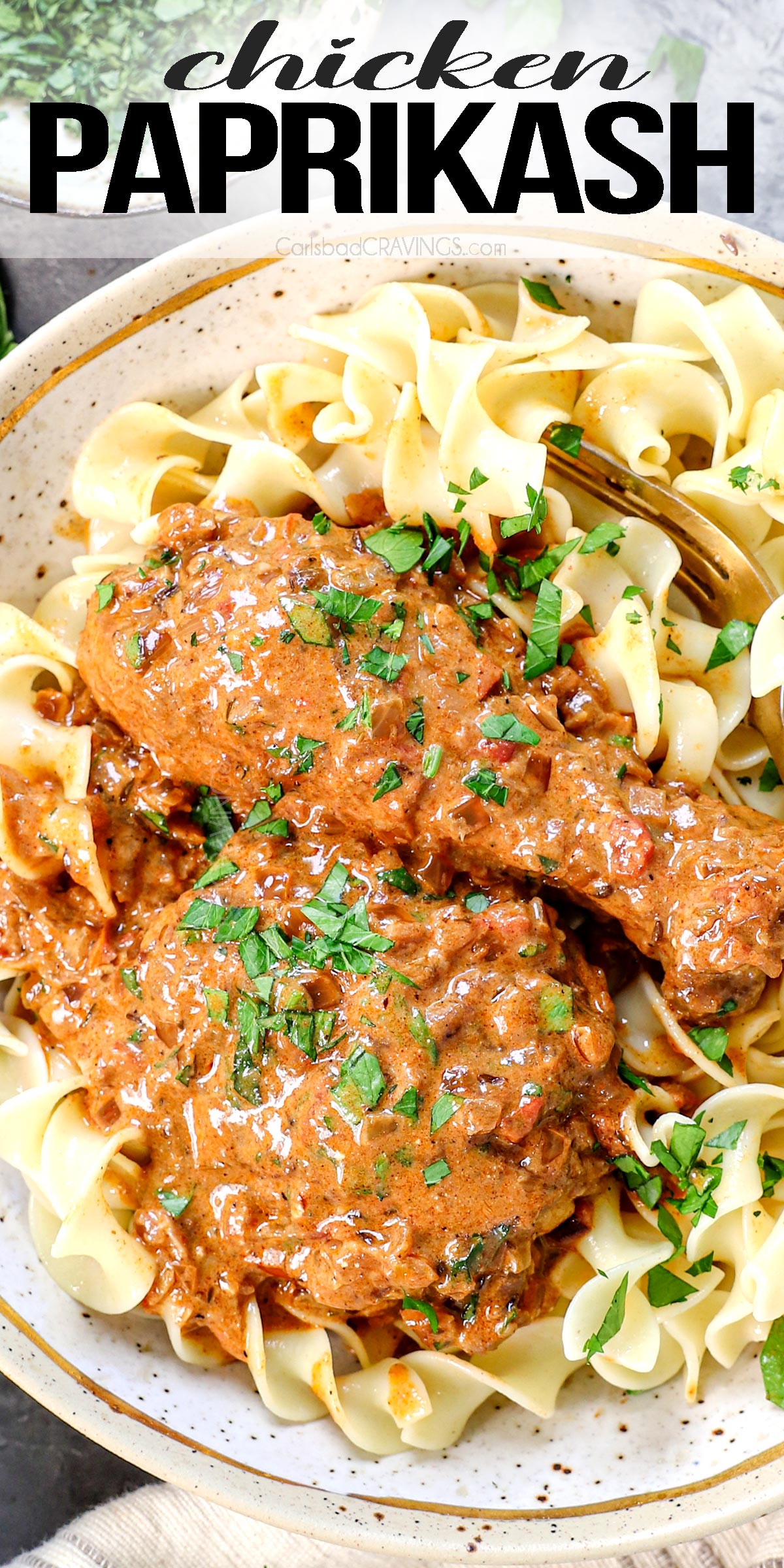
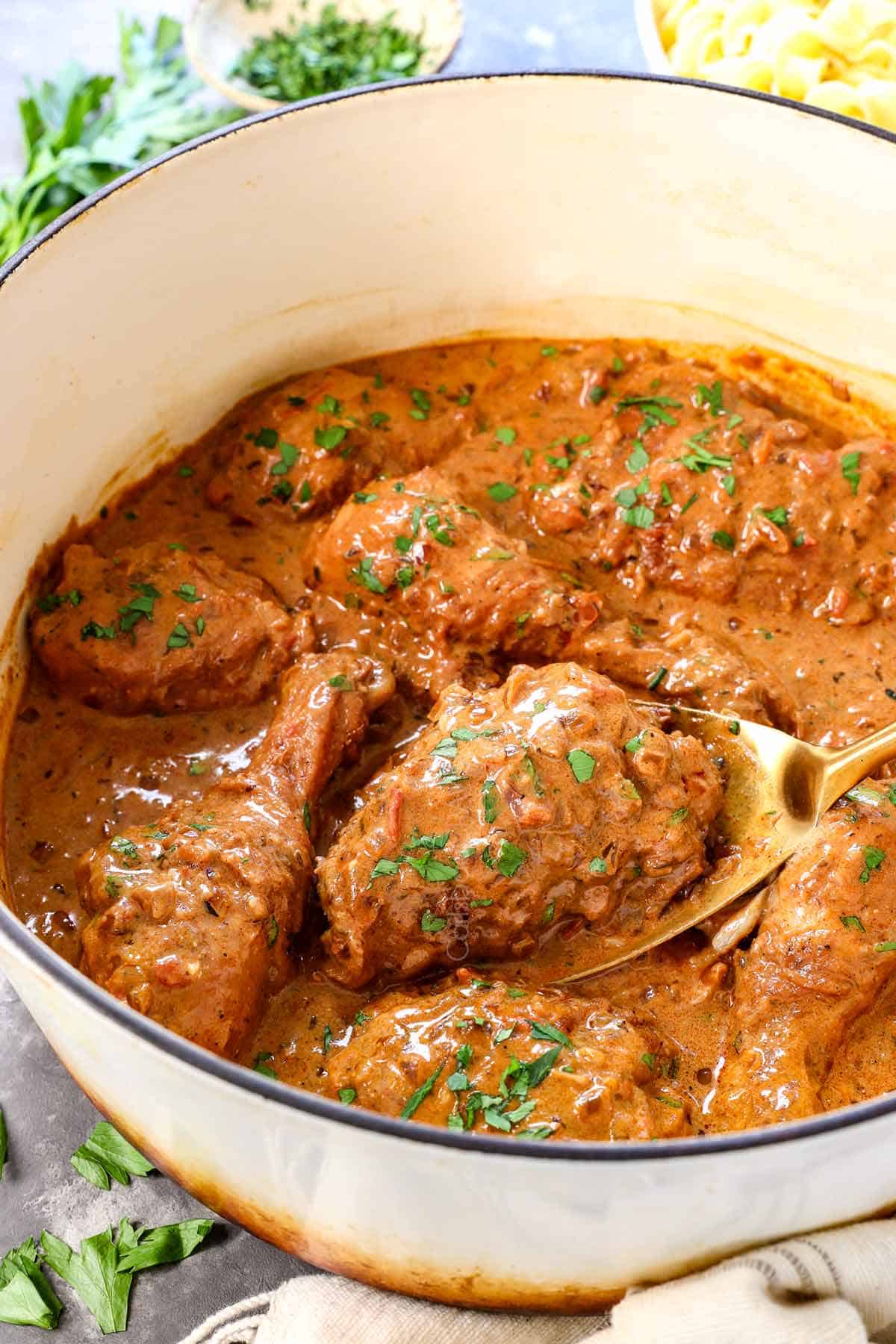
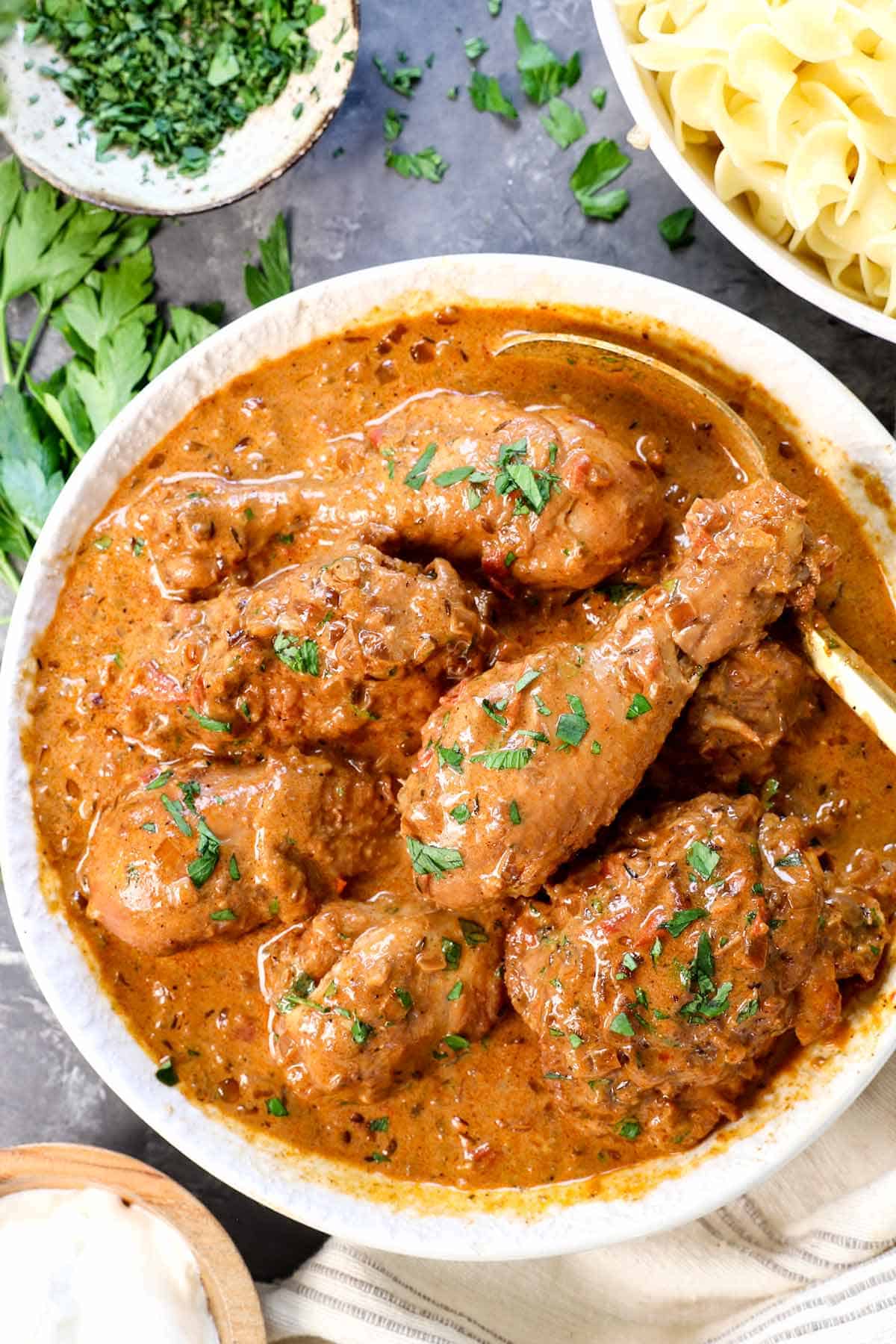
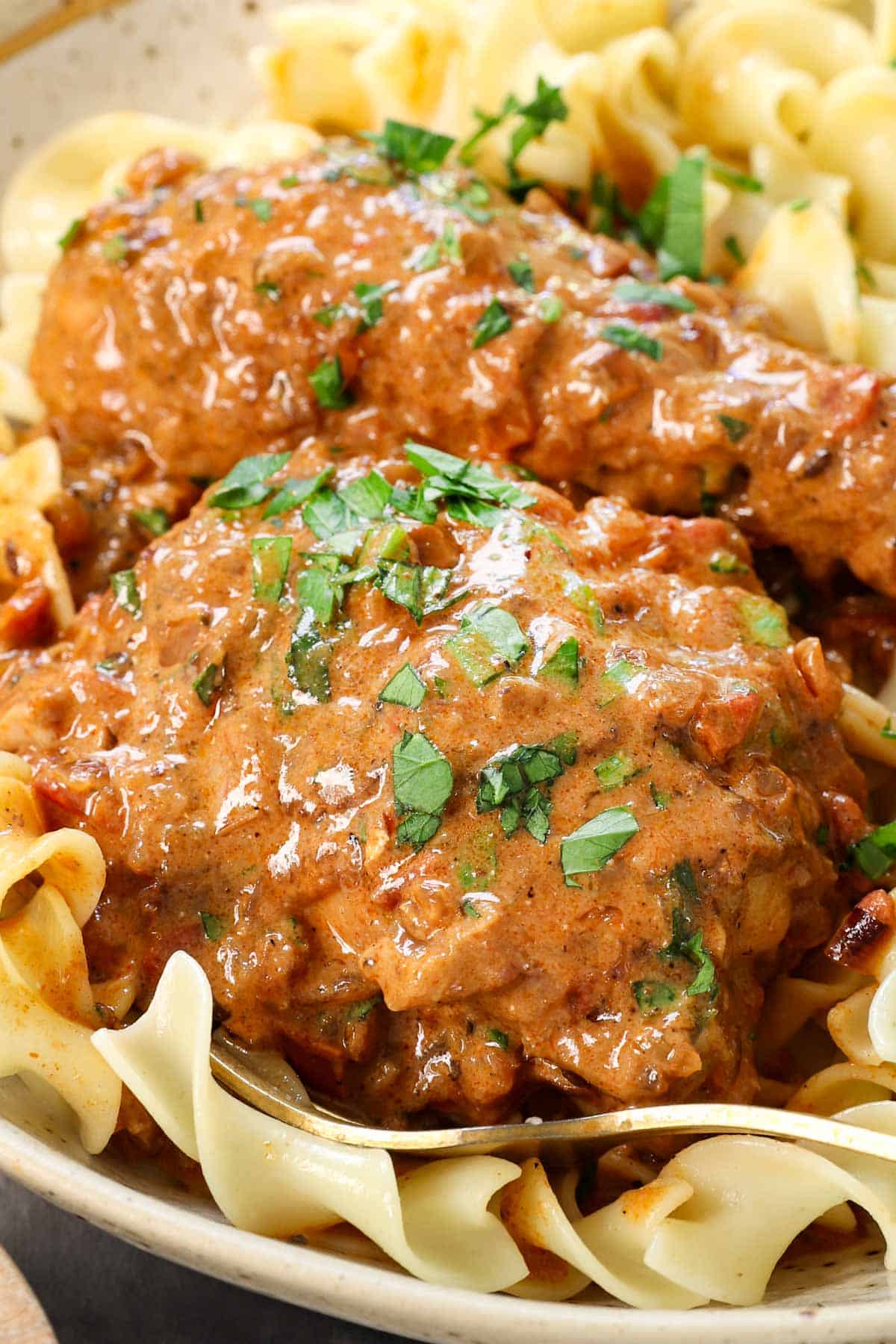
This Chicken Paprikash is rich, tangy, and deeply comforting—the authentic Hungarian classic that’s easier to make at home than you’d think! A few key techniques keep the chicken fall-off-the-bone tender and the paprika sauce silky instead of grainy, while real Hungarian ingredients and my expert tips make this creamy, deeply spiced chicken dinner downright irresistible.
PIN THIS RECIPE TO SAVE FOR LATER

Why This Recipe Works
After making chicken paprikash countless ways, I’ve dialed in the techniques that make this version exceptionally silky, tender, and authentic.
• SEARING the chicken skin-side down first renders the fat and builds a deep, golden crust that seasons the whole pot as it simmers.
• SWEET PAPRIKA, not hot or smoked, is the real backbone of an authentic paprikash—it’s what gives the sauce its signature brick-red color and mellow, fruity depth instead of straight heat.
• SIMMERING THE CHICKEN GENTLY at medium-low, never a hard boil, keeps the meat fall-off-the-bone tender instead of tough and stringy.
• A CORNSTARCH SLURRY thickens the sauce to a silky, cling-to-the-noodles consistency without the heaviness of a raw flour-based roux.
• ROOM-TEMPERATURE SOUR CREAM, stirred in at the very end, blends into a smooth, tangy sauce instead of curdling from the shock of cold dairy hitting a hot pot.

What is Chicken Paprikash?
Chicken Paprikash—paprikás csirke in Hungarian—is one of Hungary’s most iconic dishes, built entirely around sweet paprika, a spice that didn’t become central to Hungarian cooking until the 19th century, after arriving via Ottoman trade routes centuries earlier. Unlike its heartier cousin goulash, paprikash is enriched with sour cream at the end, giving the sauce a tangy, velvety finish instead of a straight tomato-and-broth base. It’s traditionally ladled over nokedli, tiny Hungarian egg dumplings similar to spaetzle, though wide egg noodles make an easy and superbly delicious stand-in.

Ingredients
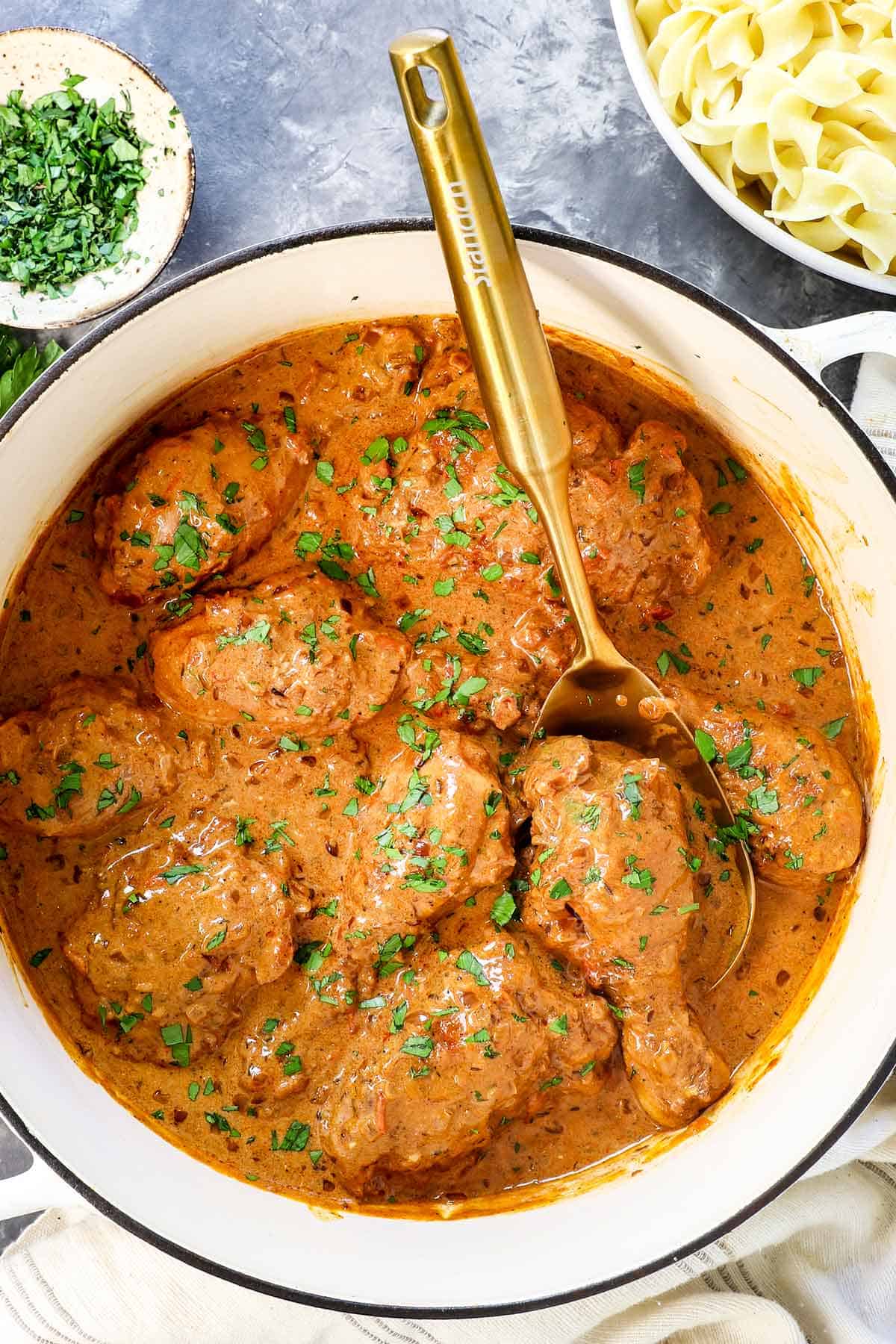
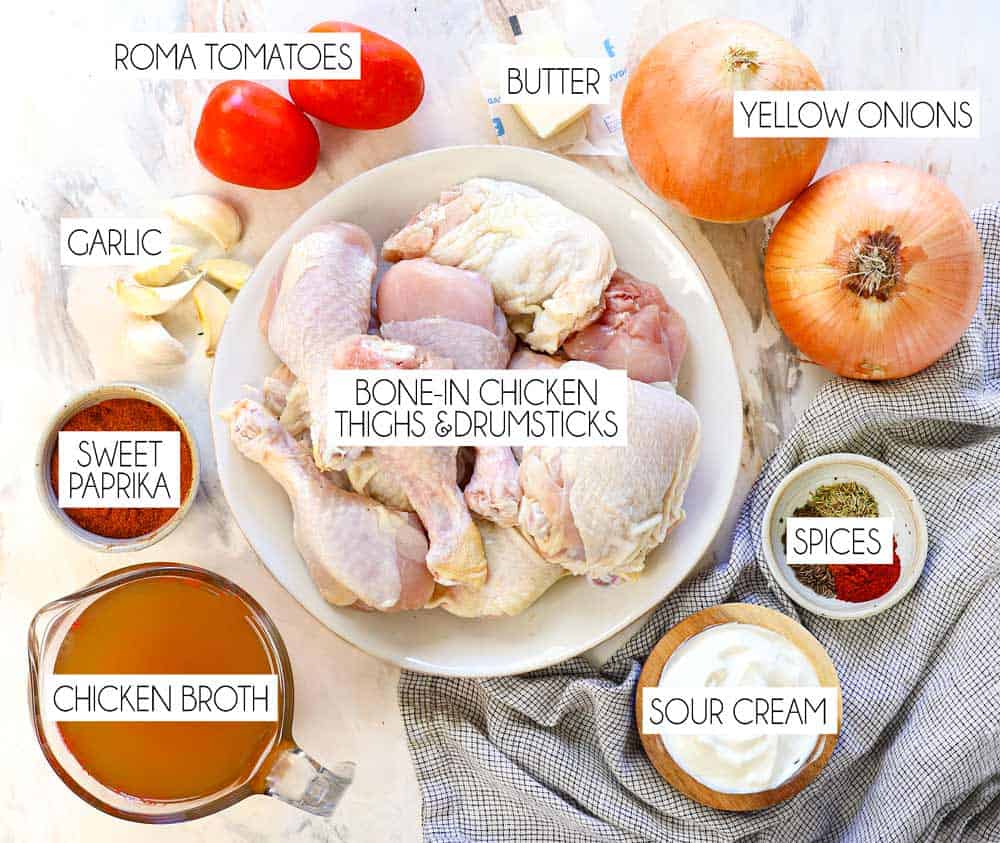
Let’s take a closer look at some key ingredients you’ll need to make this recipe (measurements in the printable recipe card at the bottom of the post):
Substitutions

How to Make Chicken Paprikash
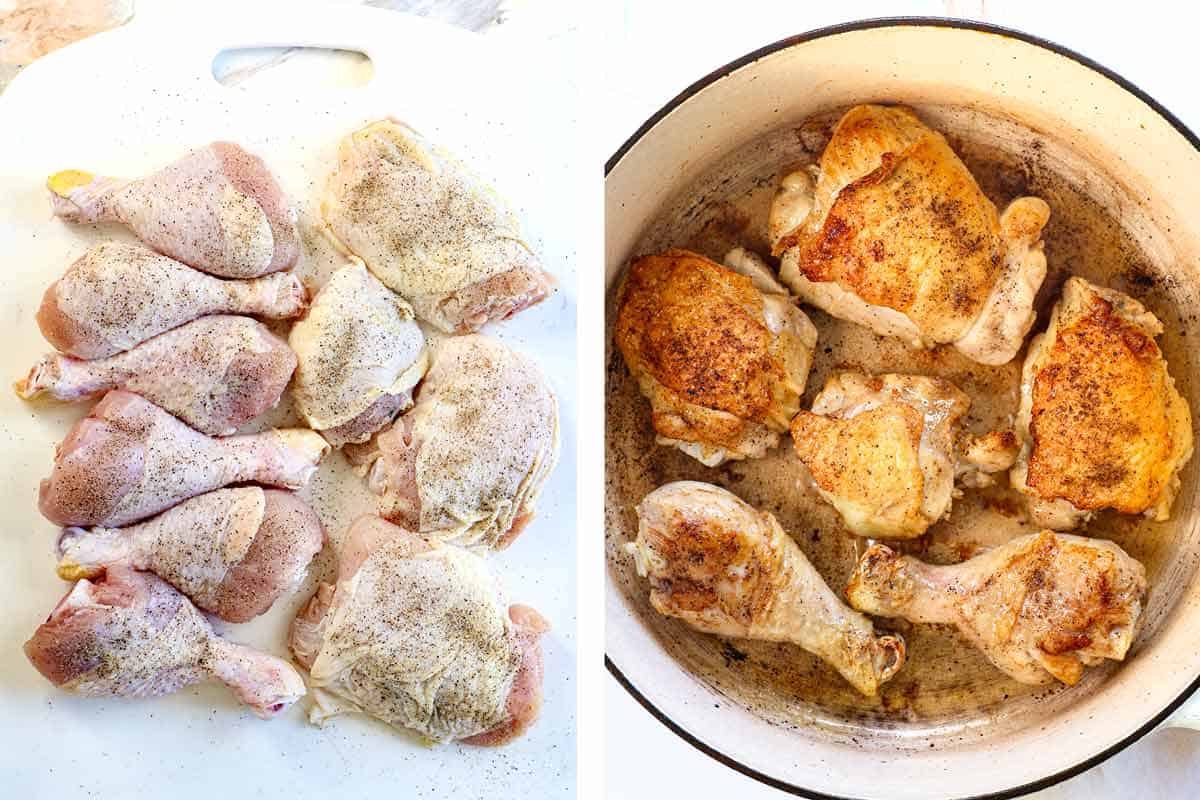
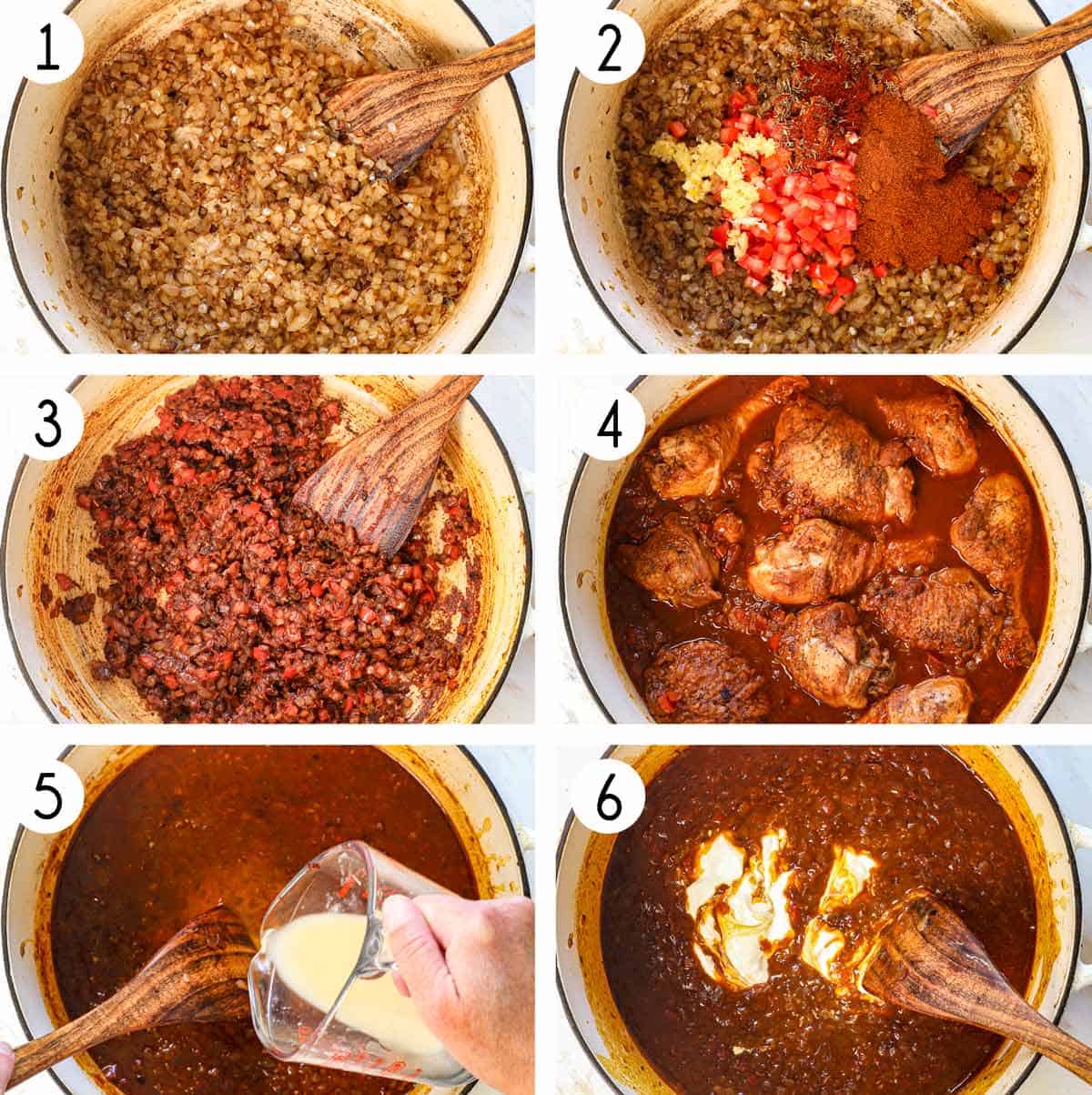
Let’s take a closer look at how to make this recipe with step-by-step photos (full recipe in the printable recipe card at the bottom of the post):

TIPS and Tricks
• Pat the chicken bone dry before searing. Any surface moisture steams instead of sears, so you’ll lose the crisp, golden skin that flavors the whole pot.
• Don’t crowd the pot. Sear the chicken in batches with space between pieces—overcrowding drops the pan’s temperature and steams the chicken instead of browning it.
• Check doneness with a thermometer, not time alone. Bone-in thighs and drumsticks benefit from cooking a little longer than the safe 165°F. At 170–175°F, the connective tissue has had more time to break down, so the meat becomes noticeably more tender and pulls away from the bone more easily.
• Whisk the cornstarch slurry completely smooth before adding it. Undissolved lumps show up as flecks in the finished sauce instead of thickening it evenly.
• Keep the heat low once the sour cream goes in. A hard boil after that point risks breaking the sauce.
• You don’t have to eat the skin. All that simmering softens the crisp skin you built while searing—its job was to render fat and flavor into the pot, so feel free to peel it off before serving if you’d rather skip the soft texture.

variations
• Make it spicier: increase the cayenne, or stir in a pinch of hot paprika.
• Swap the protein: boneless chicken thighs work well (reduce the simmer time); some cooks make a version with pork or veal for a heartier stew.
• Additions: stir in sliced bell peppers with the onions, a nod to the peppers used in traditional Hungarian lecsó.
• Make it a lighter meal: serve over rice or mashed potatoes instead of noodles.

Storage & Make Ahead
• Refrigerate: store in an airtight container for up to 4 days.
• Reheat: warm gently over low heat on the stovetop, stirring often—high heat risks breaking the sour cream sauce.
• Freeze the sauce before adding sour cream: dairy-based sauces can separate when frozen and thawed, so for the best texture, freeze the chicken and sauce before this step, then stir in fresh sour cream when reheating.
• Cook noodles fresh: don’t store noodles in the sauce, or they’ll turn mushy—cook a fresh batch each time you reheat.
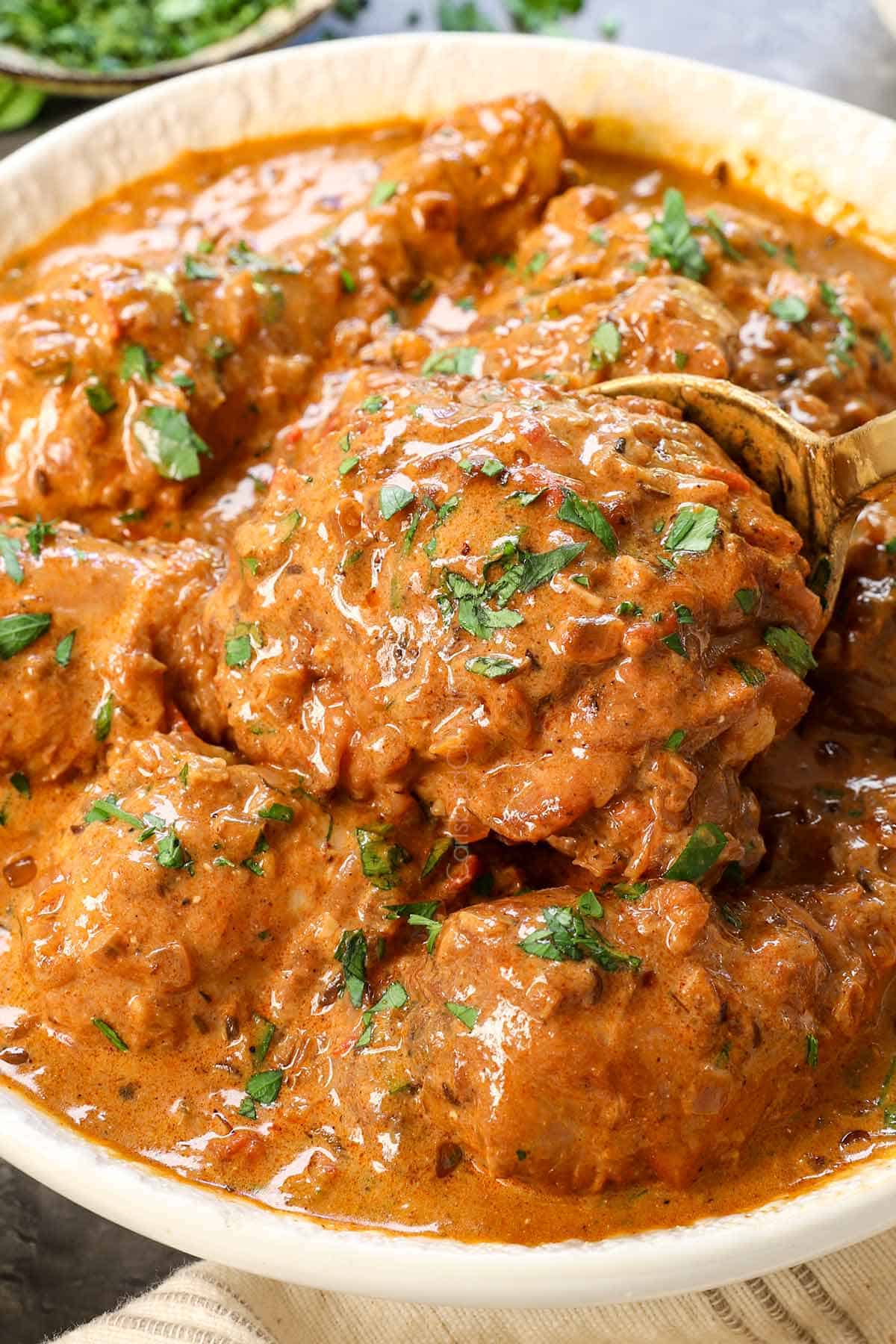

What to Serve with Chicken Paprikash
A simple, fresh side: Creamy Cucumber Salad or Garden Salad cuts through the richness of the sauce.
Something to soak up the sauce: crusty Garlic Bread or Dinner Rolls.
A hearty side of Roasted Root Vegetables rounds out the plate.
Chicken Paprikash FAQs
Goulash is a heartier, tomato-and-broth-based stew usually made with beef; paprikash is lighter and finished with sour cream for a creamy, tangy sauce, traditionally made with chicken.
I don’t recommend it—breast meat dries out over the simmer time this dish needs. Bone-in thighs and drumsticks stay juicy and add more flavor to the sauce as they cook. You can use all drumsticks or all thighs if you wish.
Cold sour cream added to a hot pot, or a hard boil after it’s stirred in, are the two most common causes. Bring the sour cream to room temperature first and keep the heat low once it’s added.
Yes—it actually tastes even better the next day once the flavors meld. See the storage section above for the best way to reheat it.

Want more Hungarian comfort food?
Try my Hungarian Goulash next.
WANT TO TRY THIS Chicken Paprikash RECIPE?
PIN IT to your recipe BOARD TO SAVE FOR LATER!
FIND ME ON PINTEREST FOR MORE GREAT RECIPES! I AM ALWAYS PINNING :)!
©Carlsbad Cravings by CarlsbadCravings.com


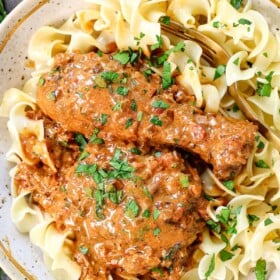
Creamy Hungarian Paprika Chicken
Save This Recipe To Your Recipe Box
You can now create an account on our site and save your favorite recipes all in one place!
Ingredients
Chicken
- 3 pounds bone-in, skin-on chicken thighs and drumsticks
- 1½ teaspoons salt, divided
- 1/2 teaspoon pepper
- 2 tablespoons unsalted butter
- 1 tablespoon olive oil
- 2 medium yellow onions, diced
- 2 Roma tomatoes, seeded and diced
- 6 cloves garlic, minced
- 1/4 cup sweet (Hungarian) paprika (NOT basic, hot, or smoked)
- 1 teaspoon smoked paprika
- 1/2 tsp EACH dried thyme, caraway seeds
- 1/4 teaspoon cayenne pepper
- 2 cups reduced-sodium chicken broth
- 2 bay leaves
Add Later
- 2 tablespoons cornstarch
- 1/4 cup reduced-sodium chicken broth
- 3/4 cup full-fat sour cream, room temperature
- Salt and pepper to taste
For Serving
- Nokedli, csipetke, or egg noodles
- Sour cream
- Fresh parsley (optional)
Instructions
- Prep: Remove the sour cream from the fridge to come to room temperature.
- Sear chicken: Pat the chicken dry, then season with 1 teaspoon salt and ½ teaspoon pepper. Melt 2 tablespoons butter with 1 tablespoon olive oil in a large Dutch oven over medium-high heat. Working in batches as needed, sear the chicken over medium-high heat until golden and crisp, then transfer to a plate.
- Sauté onions: Add a drizzle of olive oil if needed, then add the onions. Cook, stirring often, until softened, about 8 minutes.
- Sauté tomatoes: Reduce the heat to medium. Add the tomatoes, garlic, all the spices (including the remaining ½ teaspoon of salt), and sauté for 2 minutes.
- Simmer: Stir in the chicken broth and scrape the bottom of the pot to deglaze. Return the chicken to the pot. Cover and bring it to a boil, then reduce the heat to just above low for a gentle simmer. Simmer for 30–40 minutes, until the chicken reaches 170–175°F in the thickest part of the meat, avoiding the bone. Remove the chicken to a plate.
- Thicken: Make a cornstarch slurry by mixing 2 tablespoons cornstarch with ¼ cup of cold chicken broth in a cup/bowl until the cornstarch dissolves completely. Slowly whisk it into the pot over low heat. Bring to a simmer for 5–10 minutes, until thickened. Stir in the sour cream, then return the chicken to the pot.
- Serve over nokedli (or American egg noodles), garnished with a dollop of sour cream and parsley, if desired.
Notes
Tips and Tricks
- Sweet paprika: the star of the dish and non-negotiable—hot, smoked, or basic paprika will not work and can ruin the dish. Look for (Hungarian) sweet paprika. You may find it at your grocery store, but Amazon is likely the best option.
- Check doneness with a thermometer, not time alone. Bone-in thighs and drumsticks benefit from cooking a little longer than the safe 165°F. At 170–175°F, the connective tissue has had more time to break down, so the meat becomes noticeably more tender and pulls away from the bone more easily.
- You don’t have to eat the skin. All that simmering softens the crisp skin you built while searing—its job was to render fat and flavor into the pot, so feel free to peel it off before serving if you’d rather skip the soft texture.
Want To Make This Recipe?

Did You Make This Recipe?
Tag @CarlsbadCravings and Use #CarlsbadCravngs
Leave a Review, I Always Love Hearing From You!








leave a review